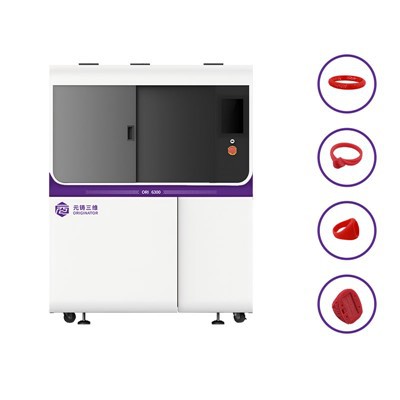
In the dynamic world of jewelry design and manufacturing, 3D printing has emerged as a game – changer, offering unparalleled flexibility in terms of design, production, and material usage. As a dedicated supplier of Jewelry 3D Printers, I’ve had the privilege of witnessing firsthand how the flexibility of 3D – printed jewelry materials is revolutionizing the industry. Jewelry 3D Printer
1. Material Variety
One of the most significant aspects of the flexibility of 3D – printed jewelry materials is the vast range available. Traditional jewelry – making often relies on a limited set of precious metals like gold, silver, and platinum, along with gemstones. However, 3D printing has broadened this horizon significantly.
Resins
Resins are a popular choice for 3D – printed jewelry. They come in a wide array of colors, from transparent and translucent options to opaque, vivid hues. Some resins are formulated to mimic the appearance of precious metals, such as gold – toned or silver – toned resins. This allows designers to create pieces that look like high – end jewelry at a fraction of the cost. Moreover, resins can be easily post – processed. They can be polished to a high shine, engraved, or painted, providing endless possibilities for customization.
For example, a resin – printed pendant can start as a basic, smooth – surfaced design. After printing, it can be painted with a metallic finish to give it the look of a gold pendant. Or, intricate engravings can be added using a laser engraving machine, transforming a simple piece into a unique work of art.
Metals
3D – printed metals have also made great strides in the jewelry industry. In addition to the traditional precious metals, 3D printing can work with a variety of alloys. Titanium, for instance, is a lightweight and strong metal that has become more accessible in jewelry production through 3D printing. It offers a modern and industrial look, which is popular among contemporary consumers.
Stainless steel is another metal used in 3D – printed jewelry. It is durable, corrosion – resistant, and has a sleek appearance. Designers can create complex geometric shapes and structures with stainless steel that would be extremely difficult or impossible to achieve using traditional metal – working techniques.
Biodegradable and Sustainable Materials
With the growing emphasis on sustainability, 3D – printed jewelry can also be made from biodegradable materials. Some companies are developing plant – based polymers that can be used for 3D printing. These materials are not only environmentally friendly but also offer unique textures and colors. For example, a jewelry designer can create a collection of earrings made from a biodegradable polymer that has a natural, earthy look, appealing to eco – conscious consumers.
2. Design Flexibility Enabled by Materials
The flexibility of 3D – printed jewelry materials directly translates into design freedom. Unlike traditional manufacturing methods, which often have limitations due to the physical properties of materials and the manufacturing processes involved, 3D printing allows designers to push the boundaries of what is possible.
Complex Geometric Shapes
Materials used in 3D – printed jewelry can be shaped into the most intricate and complex geometric forms. For example, a lattice structure, which is a network of intersecting lines, can be easily created using 3D printing. This type of structure is extremely difficult to produce using traditional casting methods because it requires a high level of precision and the ability to create internal voids.
With 3D – printed resins or metals, designers can create lattice – structured rings, necklaces, or brooches. These pieces not only look visually stunning but also have a unique weight distribution. The open lattice design makes the jewelry lighter, which is more comfortable for the wearer.
Organic and Fluid Shapes
Nature – inspired, organic shapes are also well – suited for 3D – printed jewelry. Materials can be manipulated to mimic the curves and contours of natural objects such as leaves, flowers, or seashells. Resins, in particular, are excellent for capturing these delicate organic details.
A jewelry designer can use 3D modeling software to create a digital model of a flower – shaped pendant. The 3D printer can then precisely reproduce this model using resin. The result is a pendant with lifelike petals and a smooth, flowing surface that would be very challenging to achieve with traditional hand – carving or casting techniques.
Customization at Scale
3D – printed jewelry materials enable mass customization. Each piece can be easily modified to meet the specific requirements of individual customers. For example, a consumer may want a personalized ring with their initials or a special symbol engraved on it. With 3D printing, the design can be quickly adjusted in the digital model, and the printer can produce the customized piece without any significant increase in cost or production time.
This level of customization is made possible by the flexibility of the materials. Whether it’s a resin – based ring or a metal – printed bracelet, the materials can be easily adapted to incorporate different design elements, making each piece truly unique.
3. Production Flexibility
The flexibility of 3D – printed jewelry materials also extends to the production process. This is a significant advantage for jewelry manufacturers, especially small – scale and independent designers.
Low – Volume Production
Traditional jewelry manufacturing often requires high minimum order quantities due to the setup and tooling costs involved in processes like casting. However, 3D printing allows for low – volume production. With 3D – printed materials, a designer can produce just a few pieces of a particular jewelry design without incurring excessive costs.
For example, a new designer may want to test the market with a limited collection of 3D – printed resin earrings. They can print a small batch to showcase at local events or online. If the response is positive, they can then scale up production. This low – risk approach to production is made possible by the flexibility of the materials and the 3D printing technology.
Rapid Prototyping
3D – printed jewelry materials are ideal for rapid prototyping. Designers can quickly create a tangible prototype of their jewelry design using a 3D printer. They can then evaluate the design in terms of its appearance, fit, and functionality. If any changes are needed, the digital model can be modified, and a new prototype can be printed within a short time.
For instance, if a designer creates a 3D – printed metal bracelet prototype and finds that the clasp is not functioning properly, they can make the necessary adjustments to the digital design and print a new prototype. This iterative process of prototyping and refinement is much faster and more cost – effective compared to traditional prototyping methods.
On – Demand Production
Another aspect of production flexibility is on – demand production. With 3D – printed jewelry materials, manufacturers can produce jewelry as orders come in. This eliminates the need for large inventories, reducing storage costs and the risk of over – production.
For example, an online jewelry store can offer a range of 3D – printed jewelry designs. When a customer places an order, the store can print the piece using the appropriate material and ship it directly to the customer. This just – in – time production model is made possible by the flexibility of 3D – printed materials and the efficiency of 3D printing technology.
4. Cost – Efficiency and Flexibility
The flexibility of 3D – printed jewelry materials also has implications for cost – efficiency. While the initial investment in a 3D printer and the associated software may be significant, the long – term cost savings can be substantial.
Reduced Material Waste
Traditional jewelry manufacturing processes often generate a significant amount of material waste. For example, in casting, excess metal may be removed during the finishing process. With 3D printing, materials are used more efficiently. The printer only deposits the material where it is needed, reducing waste.
For instance, when printing a resin – based ring, the 3D printer precisely builds the ring layer by layer, using only the necessary amount of resin. This not only saves on material costs but also has a positive environmental impact.
Lower Labor Costs
3D printing can also reduce labor costs. Traditional jewelry – making requires skilled artisans who spend hours hand – carving, casting, and finishing the pieces. In contrast, 3D printing is an automated process. Once the digital design is created, the 3D printer can produce the jewelry with minimal human intervention.
A jewelry manufacturer can use a 3D printer to produce a large number of pieces in a relatively short time, with less labor required. This allows the manufacturer to allocate their human resources to more creative and high – value tasks, such as design development and customer service.
In conclusion, the flexibility of 3D – printed jewelry materials is a driving force behind the transformation of the jewelry industry. From the wide variety of materials available to the design, production, and cost – efficiency benefits, 3D printing offers endless possibilities for jewelry designers and manufacturers.
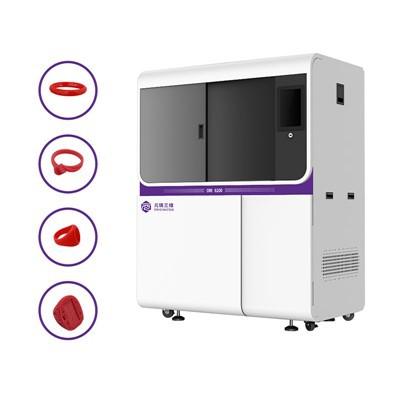
Jewelry 3D Printer If you are a jewelry designer, manufacturer, or retailer looking to embrace the future of jewelry production, our Jewelry 3D Printers can provide you with the tools to unlock the full potential of 3D – printed jewelry materials. We are committed to helping you achieve your creative and business goals. Contact us to start a discussion about how our 3D printers can meet your specific needs and revolutionize your jewelry production process.
References
- Curodeau, M. (2018). 3D Printing in Jewelry Manufacturing: Technology, Innovation, and Design.
- Ptaszek, E. (2019). Materials for 3D – Printed Jewelry: A Review. Journal of Jewelry Technology and Research.
- Wong, S. C., & Hernandez, A. (2012). A Review of 3D Printing. Assembly Automation.
Hangzhou Originator 3D Technology Co., Ltd.
Hangzhou Originator 3D Technology Co., Ltd. is one of the most experienced jewelry 3d printer manufacturers and suppliers in China. With abundant experience, we warmly welcome you to wholesale high quality jewelry 3d printer made in China here from our factory. Contact us for more details.
Address: Room 403, Building 2, Block B, Heda Incubation Park,No. 452, 6th Avenue, Xiasha, Qiantang District,Hangzhou, Zhejiang, China
E-mail: Sales@originator3d.com
WebSite: https://www.originator3d.com/
