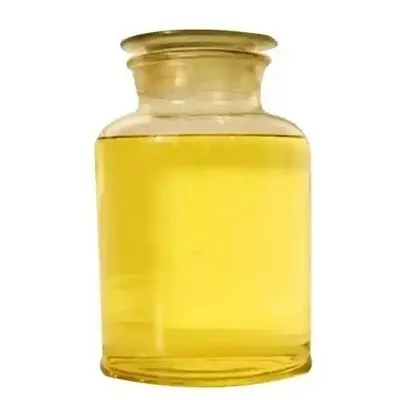
Esters are a diverse class of organic compounds with a wide range of applications across various industries. In the glass industry, esters play a crucial role in several processes, contributing to the quality, performance, and efficiency of glass production. As an esters supplier, I have witnessed firsthand the significance of these compounds in the glass manufacturing sector. In this blog post, I will explore the various uses of esters in the glass industry, highlighting their importance and benefits. Esters
1. Solvents in Glass Coating
One of the primary applications of esters in the glass industry is as solvents in glass coating formulations. Glass coatings are used to enhance the properties of glass, such as scratch resistance, anti – reflection, and self – cleaning capabilities. Esters are excellent solvents for many coating materials, including polymers and resins.
Esters have several advantages as solvents. Firstly, they have a relatively low toxicity compared to some other common solvents, which makes them a safer choice for workers in the coating process. Secondly, esters have good solubility for a wide range of coating components, allowing for the formation of homogeneous coating solutions. This homogeneity is essential for achieving uniform coating thickness and performance on the glass surface.
For example, ethyl acetate is a commonly used ester solvent in glass coating applications. It has a pleasant odor and evaporates quickly, which is beneficial for the coating drying process. The fast evaporation rate helps to reduce the curing time of the coating, increasing the overall efficiency of the glass coating production line.
2. Plasticizers in Glass Reinforcement
In the production of reinforced glass, such as fiberglass – reinforced glass composites, esters are used as plasticizers. Fiberglass is often used to strengthen glass structures, but the resin matrix that binds the fiberglass needs to have certain flexibility and workability.
Esters act as plasticizers by reducing the glass transition temperature of the resin matrix. This allows the resin to be more flexible at room temperature, making it easier to process during the manufacturing of the glass composite. For instance, dioctyl phthalate (DOP), an ester, has been widely used as a plasticizer in the past. Although there are some environmental concerns associated with DOP in recent years, new and more environmentally friendly esters are being developed as alternatives.
The use of esters as plasticizers also improves the impact resistance of the glass composite. The flexible resin matrix can better absorb and distribute the energy from impacts, reducing the likelihood of the glass breaking under stress. This is particularly important in applications where the glass needs to withstand mechanical forces, such as in the automotive and construction industries.
3. Lubricants in Glass Molding
During the glass molding process, esters are used as lubricants. Glass molding involves shaping molten glass into various forms, such as bottles, jars, or flat glass sheets. The high – temperature and high – pressure conditions in the molding process can cause the glass to stick to the molds, leading to defects in the final product.
Esters have excellent lubricating properties, which help to reduce the friction between the molten glass and the mold surface. This not only prevents the glass from sticking but also allows for a smoother and more precise molding process. For example, some fatty acid esters are used as mold lubricants in the glass industry. These esters can form a thin film on the mold surface, providing a barrier between the glass and the mold.
The use of esters as lubricants also helps to extend the lifespan of the molds. By reducing the wear and tear on the mold surface, the frequency of mold replacement is decreased, which in turn reduces the production cost. Additionally, the better surface finish of the glass products due to the use of lubricants can enhance their marketability.
4. Stabilizers in Glass Additives
In glass manufacturing, various additives are used to improve the properties of the glass, such as its color, transparency, and chemical resistance. Esters can act as stabilizers for these additives.
Some additives in glass may be prone to degradation under the high – temperature conditions of glass melting and processing. Esters can help to prevent this degradation by providing a stable environment for the additives. For example, in the production of colored glass, certain pigments are used to achieve the desired color. Esters can protect these pigments from oxidation and other chemical reactions during the glass – making process, ensuring that the color remains consistent and vibrant in the final glass product.
Moreover, esters can also improve the compatibility of different additives in the glass mixture. They can help to disperse the additives evenly throughout the glass melt, which is crucial for achieving uniform properties in the glass. This is especially important in the production of high – quality glass products, where any variation in properties can be a significant drawback.
5. Cleaning Agents in Glass Production
Esters are also used as cleaning agents in the glass industry. Before the glass is coated, molded, or further processed, it needs to be thoroughly cleaned to remove any contaminants, such as dust, oil, and grease.
Esters have good cleaning capabilities and can dissolve a variety of organic contaminants. They are often used in combination with other cleaning agents to form effective cleaning solutions. For example, isopropyl acetate is a common ester used in glass cleaning. It can quickly dissolve oils and greases on the glass surface, leaving the glass clean and ready for the next processing step.
Using esters as cleaning agents has the advantage of being environmentally friendly compared to some traditional cleaning solvents. Many esters are biodegradable, which reduces the environmental impact of the glass production process. Additionally, esters have a relatively low volatility, which means less solvent is lost to the atmosphere during the cleaning process.
Conclusion
In conclusion, esters have a wide range of uses in the glass industry, from solvents in coating formulations to cleaning agents in the production process. Their unique properties, such as low toxicity, good solubility, lubricating ability, and stabilizing effects, make them indispensable in modern glass manufacturing.
As an esters supplier, I am well – aware of the importance of providing high – quality esters to meet the specific needs of the glass industry. Our esters are carefully formulated and tested to ensure their performance and compatibility with different glass production processes.
Hydroxamic Acid Collectors If you are involved in the glass industry and are looking for reliable esters suppliers, I encourage you to reach out for a procurement discussion. We can provide you with detailed information about our product range, technical specifications, and pricing. By working together, we can contribute to the further development and success of the glass industry.
References
- Chemistry of Glass – Forming Processes, Academic Press.
- Handbook of Glass Science and Technology, Wiley – Interscience.
- Industrial Organic Chemistry, Wiley – VCH.
Bitop Bihope Qingdao Mining Co., Ltd
Bitop Bihope Qingdao Mining Co., Ltd. is one of the most professional esters manufacturers and suppliers in China, featured by quality products and low price. Please rest assured to buy discount esters in stock here and get quotation from our factory. Customized orders are welcome.
Address: Room 410, 4th Floor, Shengquan Business Building, No. 263 Yitong Road, Huangdao District, Qingdao City, Shandong Province, China
E-mail: btbhmining@163.com
WebSite: https://www.btbhmining.com/
