What is the surface roughness of titanium parts? Well, as a supplier of titanium parts, I’ve dealt with this topic a whole lot, and I’m stoked to share what I’ve learned with you. Titanium Parts
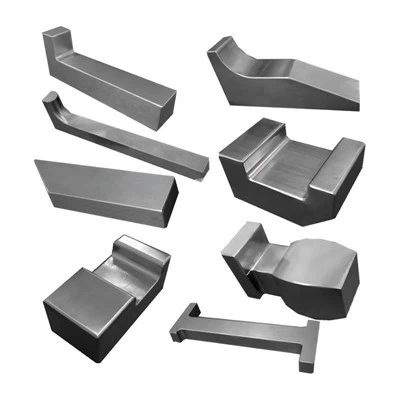
Let’s start with the basics. Surface roughness is all about how smooth or bumpy the surface of a titanium part is. It’s measured in different ways, but the most common ones are Ra (arithmetical mean deviation of the assessed profile) and Rz (mean height of the profile irregularities). These values tell us how much the surface deviates from a perfectly smooth plane.
Why does surface roughness matter? It’s super important in a bunch of ways. First off, in terms of functionality. If you’re using titanium parts in a high – precision machine, like in aerospace or medical equipment, a smooth surface can reduce friction. Less friction means less wear and tear on the parts, which in turn extends their lifespan. For example, in a jet engine, titanium turbine blades with a low surface roughness can operate more efficiently, reducing fuel consumption and maintenance costs.
On the other hand, sometimes you actually want a rougher surface. In applications where you need good adhesion, like when you’re coating the titanium part or gluing it to something else, a bit of roughness can provide more surface area for the coating or adhesive to grip onto. This is crucial in industries such as automotive manufacturing, where parts need to be painted or bonded together.
Now, let’s talk about how surface roughness is achieved. There are several manufacturing processes that can influence the final surface roughness of titanium parts.
Machining is one of the most common methods. When we use processes like turning, milling, or grinding, the parameters we set can have a huge impact on the surface finish. For instance, in turning, the cutting speed, feed rate, and depth of cut all play a role. A lower feed rate usually results in a smoother surface, but it can also increase the machining time. So, it’s a bit of a balance between getting the right surface roughness and keeping the production cost down.
Grinding is another process that can be used to achieve a very smooth surface. By using finer abrasive grains on the grinding wheel, we can reduce the surface roughness to a minimum. However, grinding titanium can be a bit tricky because titanium has a relatively low thermal conductivity. This means that the heat generated during grinding can easily build up, leading to issues like surface burning and cracks if we’re not careful.
Polishing is a great way to get an ultra – smooth surface. We can use mechanical polishing with abrasive compounds or chemical polishing. Chemical polishing involves immersing the titanium part in a special chemical solution that dissolves a thin layer of the surface, leaving it smooth and shiny. This method is often used for parts that require a very high – end aesthetic finish, like in jewelry or high – end consumer electronics.
As a titanium parts supplier, I’ve faced all sorts of challenges when it comes to surface roughness. One time, a client needed a titanium part with an extremely low surface roughness for a medical implant. The part had to be smooth enough to prevent any irritation to the human tissue. We had to go through several trial – and – error processes with different machining and polishing techniques to meet their requirements. In the end, we managed to get the surface roughness within the acceptable range, and the client was really happy with the result.
Another case involved a client in the automotive industry. They needed a titanium part with a specific surface roughness to ensure proper adhesion of a new type of coating they were developing. We worked closely with their R & D team to test different surface treatments and coatings. Through a series of experiments, we found the right combination of surface roughness and coating that met their performance criteria.
So, as you can see, understanding and controlling surface roughness is a big deal in the titanium parts business. Whether you’re in the aerospace, medical, automotive, or any other industry that uses titanium parts, getting the surface roughness right can make a huge difference in the performance and quality of your products.
If you’re in the market for titanium parts and are concerned about surface roughness, you’ve come to the right place. I’m here to help you figure out the best manufacturing processes and surface finishes for your specific needs. We’ve got the expertise and the equipment to produce titanium parts with a wide range of surface roughness values, whether you need a super – smooth surface for a high – precision application or a slightly rougher surface for better adhesion.

Don’t hesitate to reach out to me for a chat about your titanium parts requirements. We can discuss your project in detail, and I’ll do my best to come up with the most cost – effective and high – quality solutions for you. It would be great to have the opportunity to work with you and contribute to the success of your products.
Tungsten Copper Alloy References
- "Surface Engineering for Titanium Alloys" – A textbook that provides in – depth knowledge about surface treatments and roughness control for titanium.
- Industry research papers on the application of titanium parts in aerospace, medical, and automotive fields, which often discuss the importance of surface roughness.
Address: Wangjing Science and Technology Park, Guangshun North Street, Chaoyang District, Beijing
E-mail: sales@moly-tungsten.com
WebSite: https://www.moly-tungsten.com/
