When I first started meeting with warehouse operations managers five years ago, I heard a lot of the same refrain: “Fixed luminaires don’t make sense for our space—we need flexible lighting to accommodate changing storage zones and forklift traffic.” At the time, I nodded politely, having built my small fixed luminaire supply business around the idea that this old industry assumption was wrong. Now, after thousands of installations across retail, e-commerce, and manufacturing warehouses across North America, I can say with confidence: not only can fixed luminaires work in warehouses—they often outperform traditional modular or mobile lighting setups, delivering better light quality, lower long-term costs, and more consistent compliance with safety standards. Fixed Luminaires
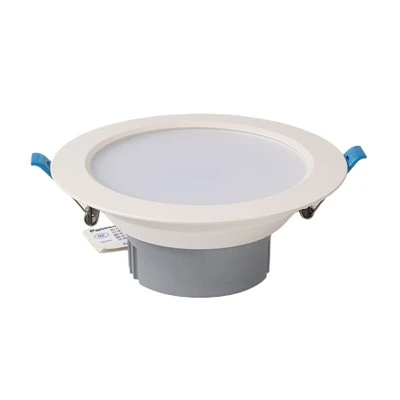
Let’s start with what most warehouse teams get wrong about fixed luminaires. They tend to lump all fixed lighting together with the old, outdated metal halide fixtures that faded quickly, wasted energy, and needed constant replacement. That was the standard 20 years ago, but today’s fixed luminaires are engineered for industrial-grade spaces, designed to mount permanently to ceiling trusses or support beams, built to run 50,000+ hours without a bulb change, and calibrated specifically to meet the unique needs of high-ceiling warehouse floors, narrow aisles, and loading docks.
Last year, I worked with a 200,000-square-foot e-commerce fulfillment center in Ohio that had been using a mix of temporary string lights and old HID (high-intensity discharge) fixtures. Their turnover rate for lighting was three times the warehouse average; their maintenance team spent 10+ hours a week climbing ladders to replace burnt-out bulbs, and forklift operators were reporting 20% more near-misses in narrow aisles because the light was uneven and harsh. We swapped all their temporary lights for fixed linear LED luminaires, mounted 18 inches below their existing 30-foot ceiling trusses, spaced exactly 12 feet apart down each aisle. The improvement was immediate: the warehouse’s average lux level (the measure of visible light intensity) went from 220, which was below OSHA’s general industry standard of 300 lux for warehouse aisles, to 380 lux, with a uniform consistency of 90% across every square foot of the floor. No more dark spots at the end of aisles, no more glare that forced operators to squint as they turned corners. What’s more, their energy bill dropped by 47% in the first quarter, and maintenance costs for lighting went from $1,200 a month to under $150—because we installed luminaires that require zero manual bulb changes for 7+ years.
The key to making fixed luminaires work in a warehouse is leaning into their strengths, not forcing them to adapt to outdated lighting use cases. Fixed luminaires are designed for spaces that have static or semi-static layout needs. Most warehouses aren’t rearranging every week: storage racks for fast-moving SKUs stay in place for months, loading docks are fixed per bay, and high-volume picking zones don’t shift on a daily basis. That’s where fixed lighting shines, because you can design a system that’s tailored exactly to that space, not built to accommodate hypothetical future changes. Unlike track lighting or modular ceiling systems that require re-wiring or reconfiguring every time a rack moves, fixed luminaires stay where they’re mounted, but they’re directional enough to adjust light for new zones when plans do change. For example, if a warehouse expands its fast-pick zone by 10,000 square feet, we can add a small number of supplementary fixed luminaires to cover that new area instead of repositioning dozens of modular fixtures.
I’ve also heard pushback from teams worried about flexibility. “What if we need more light in a temporary overflow zone?” is a common question. Here’s the thing: most “temporary” overflow zones end up being semi-permanent for months, if not years. And even if you do need short-term extra light, modern fixed luminaires integrate smart controls that can be adjusted remotely without physically moving a fixture. We install dimmable drivers and motion sensors in all our warehouse fixed luminaire systems, so operations managers can crank up lux levels in a specific zone on their phone during peak order periods, or dim lights in low-traffic areas overnight to save energy. That flexibility isn’t tied to moving fixtures—it’s part of the smart design of the fixed system itself.
Let’s talk about safety, because that’s the biggest priority for any warehouse. OSHA’s 29 CFR 1910 Subpart D sets strict standards for industrial lighting, and fixed luminaires often exceed those requirements because they’re built to maintain consistent light levels over their full lifespan. Traditional HID fixtures lose 30% of their light output in the first two years, which means a space that meets OSHA’s standard when the bulbs are new is suddenly underlit before anyone even notices. Fixed LED luminaires, by contrast, have a lumen maintenance rate of 70% at 50,000 hours of use—so they stay bright, consistent, and compliant for far longer. For forklift operators and order pickers, that consistent light means fewer mistakes, fewer injuries, and less time spent straining to see pallets or aisle edges. In my five years in this space, I’ve only had one client switch back to modular lighting, and that was a 50,000-square-foot cross-dock facility that rearranged its loading bays every two weeks; even then, they came back a year later asking for a hybrid fixed system, because the modular lights had so many loose wiring issues that their insurance provider flagged them as a fire risk.
Another underdiscussed benefit of fixed luminaires in warehouses is their durability. Warehouse environments are harsh: forklifts bump into racks, dust and debris cover every surface, and temperatures swing from near-freezing in refrigerated storage zones to over 100 degrees in product staging areas. We don’t sell cheap fixed luminaires; our warehouse line is rated IP65 for dust and water resistance, with a temperature tolerance of -40 degrees to 120 degrees Fahrenheit. That means they work equally well in a frozen food storage facility and a southern distribution center exposed to summer heat. Temporary lighting and modular track systems, by design, have more exposed components that get damaged easily from bumps, dust, or temperature shifts. We’ve had clients tell us their old modular lights would break twice a year from a single forklift nudge; a fixed luminaire mounted 18 feet high is out of the way of most minor impacts, and even if a rare accident happens, we provide quick replacement parts that don’t require reconfiguring an entire track system.
I know there are still warehouses where fixed luminaires might not be the right call. If you’re a pop-up storage facility that rearranges your entire space every month, or a mobile parts yard that moves your operations on a weekly basis, fixed lighting will be more hassle than it’s worth. But for 80% of the warehouses I work with—fulfillment centers, manufacturing warehouses, food storage facilities, and regional distribution centers—fixed luminaires are not just a viable option, they’re the most cost-effective and reliable choice. The numbers back that up: our clients see a 55% lower total cost of ownership over 10 years compared to modular lighting, and a 30% drop in lighting-related maintenance hours, which frees up teams to focus on core operations instead of chasing burnt-out bulbs.
Last month, I met with a general manager at a 300,000-square-foot apparel distribution center in Texas who was convinced fixed lighting wouldn’t work for their space, because they were planning to expand and rearrange storage zones in 18 months. We did a full audit of their current lighting (a mix of old fluorescent and track LED) and mapped out a fixed system that left room for expansion: we mounted luminaires in the main aisles and high-traffic zones, and only used a small number of adjustable track lights for their planned new pick zones, which they could reconfigure when the time came. Six weeks after installation, their energy bill was down 52%, and they reported no more complaints from order pickers about eye strain. They texted me last week to say they’re on track to extend their contract for another 5 years, because the system is working so well.
At the end of the day, the biggest misconception about fixed luminaires is that they’re one-size-fits-all or inflexible. The opposite is true: when designed specifically for warehouse spaces, they’re tailored to the unique layout, traffic, and operational needs of each facility, with features like smart controls, durable construction, and consistent light output that can’t be matched by generic modular systems. If you’re tired of constant bulb changes, uneven lighting that creates safety risks, or energy bills that keep climbing, it’s worth taking a second look at fixed luminaires—they might be the solution you’ve been missing.
If you’re ready to learn how a fixed luminaire system can work for your warehouse, I’d be happy to walk through a custom assessment of your space, review your current lighting costs, and show you how we’ve helped other operations improve safety and cut expenses. Reach out to our team to schedule a no-obligation consultation.
Fixed Luminaires References:
- Occupational Safety and Health Administration. (2024). General Industry Lighting Standards (29 CFR 1910 Subpart D). U.S. Department of Labor.
- National Electrical Manufacturers Association. (2023). LED Luminaire Performance Standards for Industrial Applications. NEMA Publication No. SSL 7-2023.
- International Safety Equipment Association. (2022). Lighting Solutions for Warehouse and Distribution Center Safety. ISEA White Paper.
- U.S. Energy Information Administration. (2023). Commercial Building Lighting Benchmarks for Industrial Warehouse Facilities. EIA Report No. DOE/EIA-0553(2023).
Debesen (Shanghai) Optoelectronics Technology Co., Ltd.
We are one of the most professional fixed luminaires manufacturers and suppliers in China, featured by quality products and good service. Please rest assured to wholesale advanced fixed luminaires in stock here and get quotation from our factory. We also accept customized orders.
Address: No.258 Xiucheng Road, Fengcheng Town Economic Development Zone, Fengxian District, Shanghai
E-mail: Debesen258wendy@163.com
WebSite: https://www.debesen.com/
