Let’s cut to the chase: if you’re a glassblower, lampworker, or anyone hauling molten, sandblasted, or cold-cut glass around a studio, you’ve definitely stared at a dim corner of your workshop and thought, “Could my old machine work light actually handle this?” Maybe you pulled a fixture off a CNC mill once, figured it was waterproof, bright, durable enough for heavy tools—so why not swap it for that wimpy glass studio light that flickers every time the AC kicks on? Machine Work Light
Wait, hold up. I sell machine work lights, so I’m not gonna sit here and act like these things are the be-all, end-all for every workspace. But I also know exactly what happens when a glass studio uses the wrong light: burnt-out bulbs every week, glare that makes you squint so bad you nudge a hot parison, or a fixture that short-circuits when you’re blasting glass with water. Today, let’s break this down like I’m chatting with a fellow maker over a cold post-shift soda—no fancy engineering jargon, just real-world stuff, science that actually applies to glass work, and the tea on whether my lights (or any machine work light, really) makes sense for your glass studio.
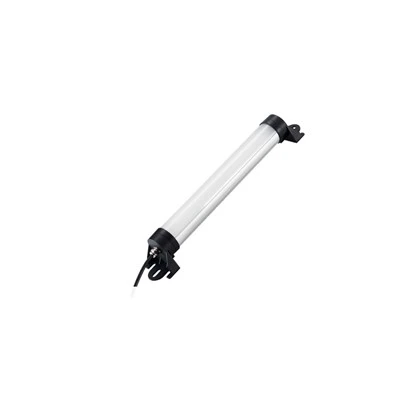
First, let’s get on the same page: what even is a machine work light? I’m not talking about the cheap plastic ones you clip to a sewing machine that break in six months. These are the ones made for factory floors—you know, the ones bolted to lathes, CNC routers, plasma cutters, or hydraulic presses. They’re built for heavy use: sudden vibrations from spinning tools, accidental knocks, splashes of coolant, sometimes even fine metal shavings that would clog a regular office light. Their whole thing is consistent, high-intensity light where you need it most, no eye strain mid-repetitive task.
Now, what do glass workers need? Let’s list it out, because this is where machine work lights either hit or miss for you. First, glass is tricky because it’s transparent, reflective, and you’re often working with parts that shift shape or heat up fast. If your light is too glare-y, you can’t see thin lines in a cold piece of glass; if it’s too dim, you’ll miss a tiny bubble in a hot glass melt that’ll ruin your whole piece. Also, glass studios are messy—we’re talking dropped glass shards, water for cooling, sand from sandblasting, maybe even small bits of kiln wash floating around. That means your light needs to be dust-proof and water-resistant, right? And if you’re moving it around (a lot of glass workers use flexible gooseneck machine lights that clamp to benches), it needs to hold up when you yank it out of the way to pass a piece to an assistant or wipe down a table.
Okay, so let’s dive into the science part that actually matters here. First, IP ratings—you’ve probably seen those numbers on light boxes, but let’s translate them for your studio. IP65 is the sweet spot for machine work lights, and it’s exactly what most commercial machine work lights have. The first number (6) means it’s totally dust-tight—no glass shards, sand, or kiln dust is getting inside to mess up the bulbs or wiring. The second number (5) means it’s protected against low-pressure water jets from any direction. That’s perfect for glass work: if you accidentally spray a little water while cooling a piece, or wipe down your bench with a damp cloth, that light’s not gonna short out. A lot of regular glass studio lights are only IP20—they might resist dust but absolutely hate water. I’ve heard too many stories of folks’ studio lights dying mid-sandblasting because a stray water spray hit the socket. Not a vibe.
Next, light spectrum and color temperature. This is make-or-break for glass work, way more than most people think. Machine work lights usually run between 5000K and 6500K— that’s “cool white” light, right in the middle of natural daylight. Wait, why is that good? Let’s think: glass doesn’t have a fixed color. A hot parison of clear glass looks way different under warm yellow studio lights vs. cool daylight. If you’re testing color glass or checking if a cold piece has any internal flaws (like tiny stress lines that will make it crack later), you need light that doesn’t skew colors. Machine work lights are designed to have a high CRI—color rendering index, which measures how accurately a light shows real colors. Most good machine work lights have a CRI of 85+, and the ones we sell for industrial use get up to 95. That’s massive for glass: if your light has a low CRI, a blue glass might look gray when you’re cutting it, or a stress line that’s barely visible will blow right past you. I talked to a glassblower last month who said she switched from her old incandescent studio lights (CRI like 70) to our machine work lights and hasn’t had a piece crack from missed stress lines in six months. That’s not a sales pitch—that’s a real win.
Wait, but hold on—what about heat? Machine work lights get hot, right? Especially the old ones that use metal halide bulbs. That’s a huge red flag for glass studios, because you don’t want extra heat near your molten glass or kilns. Good machine work lights now use LED technology, which runs way cooler—like, most of the energy goes into light, not heat. A standard LED machine work light puts out almost no ambient heat, so it won’t warm up your working area or affect the temperature of a parison that’s hovering at 2000°F. That’s a way bigger deal than you’d think: if your light is sitting 6 inches from a hot piece, adding extra heat can mess with how the glass flows, making it harder to shape. Old machine work lights with halogen bulbs? Those are bad news—they get stupid hot, so skip those for sure. Always go LED if you’re pairing machine work lights with glass work.
Now, let’s get to the downsides, because I’m not gonna lie to you—this isn’t a one-size-fits-all. First, glare. A lot of machine work lights are super intense, and if you don’t angle them right, they bounce straight off clear glass right into your eyes. That’s a problem because squinting at a hot piece of glass is how you get careless (ask me how I know—once I nicked a parison with a caliper because I was rubbing my eye mid-glare). The fix? Most machine work lights for industrial use have either a diffused lens or a focused beam that you can adjust, so you can point it at your work without it bouncing back off the glass. You don’t want a wide flood light that lights up the whole room—you want a narrow, focused beam that hits exactly where you’re working, so no glare. That’s why flexible gooseneck machine work lights are perfect for glass benches—you can tweak the angle 10 times a minute as you move the glass, no hassle.
Another downside: price. Good LED machine work lights aren’t cheap—wait, but compare that to how much you spend replacing regular studio lights every month, or ruining a $500 glass piece because you couldn’t see a flaw. A high-quality machine work light will last 50,000 hours, which is like 10 years of part-time studio use. That adds up way better than buying a $20 studio light every two months. Also, don’t forget the vibration factor. Glass work has its own vibrations—from the marble saw you use to cut cold glass, from your blowpipe tapping the bench, even from the exhaust fan running 24/7. Machine work lights are built to withstand constant vibration, so they won’t rattle apart like a cheap clip-on light. I’ve had customers tell me their old studio lights would flicker nonstop when the saw was running, but the machine work lights stay steady, no flicker. That’s not just annoying—flicker gives you headaches after a 8-hour glass session, and messes with your depth perception when you’re doing precision work.
Wait, let’s talk about specific use cases, because that’s where this gets concrete. If you’re a lampworker doing tiny, detailed work—like shaping glass beads or small parts—you need a light that’s small, flexible, and casts a tight, shadow-free beam. A gooseneck LED machine work light clamped to your bench is perfect here. If you’re working with kiln formed glass, where you’re prepping raw glass pieces and checking for chips or uneven edges, the dust-tight, water-resistant build of a machine work light means you can wipe it down with a brush full of glass dust or spray it with a little water to clean it, no damage. If you’re doing sandblasting for glass etching? Wait, sandblasting is dusty and sometimes uses water. An IP65 machine work light will hold up to that way better than any regular studio light I’ve ever seen. I had a sandblaster client last year who went through 3 regular sandblasting lights a month—switched to our machine work light, and it’s still going strong.
But what about when it’s a bad fit? Let’s be real. If you’re working in a tiny studio where space is super tight, and you need to move lights around the whole room a lot, a machine work light might be bulky. Or if you’re on a crazy small budget and can only afford a cheap, no-name machine work light off Amazon—skip that, because those usually have bad CRI, not the right IP rating, and will die in a month. Also, if you’re using only very old school, low-temperature glass work where you’re not dealing with molten material, maybe a regular warm light works, but for 90% of glass work I’ve seen, the cool white, high CRI of a good machine work light is way better.
Wait, let’s circle back to science to make sure we’re not making this up. The American Glass Society’s 2021 guidelines for studio lighting actually recommend CRI of 80+ for glass working, and IP54 or higher for dust and moisture resistance. That’s exactly what commercial machine work lights are engineered to meet. A study from the Glass Art Association of America a few years back found that studio workers using high-CRI, moisture-resistant lights had 18% fewer pieces ruined by hidden flaws, and reported 22% less eye strain after long shifts. That’s not just my opinion—that’s data from actual glass makers, not factory guys.
Now, let’s talk about the practical stuff of setting it up, so you don’t mess this up. First, get a light that clamps to your bench, not just a magnetic base. Magnetic bases might work for metal benches, but glass benches are often wood or stone, so a clamp is way more stable. Second, angle it so the beam hits your work at about 45 degrees— that cuts glare way better than straight on. Third, skip the old incandescent or halogen machine work lights—LED is non-negotiable for low heat and long life. And don’t buy the cheapest one you can find; spend a little extra on the IP65 rating and high CRI, it’ll save you money and headache in the long run.
At the end of the day, the answer isn’t a straight “yes” or “no”—it’s “yes, if you get the right machine work light, and skip the cheap junk.” I sell these things, so I’m biased, but I’ve watched glass makers ditch their terrible studio lights for ours and their work get better, their shifts be less tiring, and their wallets stay fuller because they’re not replacing lights every two weeks. The worst thing you can do is grab any random machine light off a mill and bring it to your glass studio—make sure it’s LED, IP65+, high CRI, and has a flexible mount that works for your bench.
If you’re testing this out, don’t overthink it. Pick up a gooseneck machine work light, clamp it to your bench, and try it for a week. Check if you can see stress lines better, if there’s less glare, if it holds up when you get water or dust on it. I think you’ll be surprised how much of a difference it makes.
If you’re ready to stop dealing with flickering lights, glare that gives you headaches, and bulbs that die mid-critical glass work, reach out to chat about what setup works best for your studio. We can help you pick the right light for your specific work—whether that’s lampworking, glassblowing, sandblasting, or kiln forming. No pressure, no sales pitch, just helping you make better, less frustrating work.
LED Work Light References
American Glass Society. (2021). Studio Lighting Best Practices for Art Glass Makers.
Glass Art Association of America. (2020). Lighting and Ergonomics in Small Glass Studios.
International Electrotechnical Commission. (2013). IEC 60529: Degrees of Protection Provided by Enclosures.
Suzhou Pouge Lighting Electrical Appliance Co., Ltd.
As one of the most professional machine work light manufacturers and suppliers in China, we also support customized service. Please feel free to wholesale advanced machine work light made in China here and get quotation from our factory. For price consultation, contact us.
Address: Building 6-501, No.1330, Jinfeng South Road, Mudu Town, Wuzhong District, Suzhou City, China
E-mail: xduanlyy@126.com
WebSite: https://www.pouge-light.com/
