If you’ve ever spent time out in the backcountry, at a remote worksite, or even at a large outdoor event, chances are you’ve thought about how to stay connected when cell service fades. As the owner of a small walkie-talkie supply company, I get dozens of questions a week from customers asking the same thing: “Is a 10 watt walkie talkie legal to use where I live?” It’s a great question—one that has a lot of nuance, and the answer almost never boils down to a simple “yes” or “no.” For years, I’ve helped casual hikers, construction crews, and event organizers navigate the rules, so let me break this down in plain terms, no confusing jargon, just what you need to know before you unbox that new radio. 10 Watt Walkie Talkie
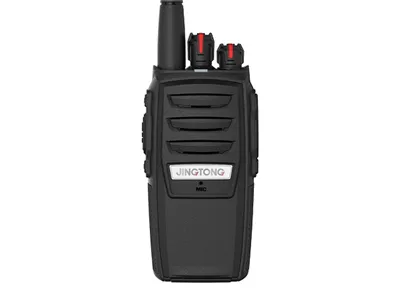
First, let’s get one basic term straight: a 10 watt walkie talkie refers to its transmitter power, the amount of energy the radio uses to send a signal. That number is key because power directly impacts range—but it also impacts regulation. Most countries, including the United States, Canada, and nations across the European Union, split two-way radio use into two broad categories: unlicensed and licensed services. That’s the biggest dividing line you need to remember, because it determines whether your 10 watt radio is allowed at all, or if you need to jump through extra hoops.
In the United States, the Federal Communications Commission (FCC) sets the rules for all radio use. If you’re looking at consumer-grade walkie talkies, the most common unlicensed bands are FRS (Family Radio Service) and GMRS (General Mobile Radio Service). Here’s where that 10 watt number gets tricky for FRS: originally, FRS radios were capped at just 2 watts of power, designed for short-range, casual use between family members or small groups. For a long time, any FRS radio pushing 10 watts would have been a hard no for the FCC—those higher-powered units were technically GMRS radios, even if they looked identical to FRS models.
But here’s the update most people miss: the FCC updated FRS rules in 2017, opening up two FRS channels to allow up to 2 watts, but also creating a new category for FRS radios that work in conjunction with GMRS. Wait, no—let me clarify: if your 10 watt walkie talkie is designed for GMRS, then it’s a different story. GMRS is a licensed service, meaning you have to apply for a GMRS license from the FCC for around $35 every 10 years, and that license lets you operate radios up to 50 watts of power. So a 10 watt GMRS radio is totally legal, as long as you have that license, and you’re using it on GMRS frequencies. But the catch here is that many off-brand, no-name 10 watt radios sold online skip the FCC’s Part 95 certification, which is required for any radio sold and used in the U.S. That means even if it’s a GMRS radio, if it never went through the FCC’s testing to confirm it doesn’t interfere with other services, using it could get you in hot water—no license needed for the FCC to issue a fine for uncertified equipment.
Now, what about if you’re operating outside the U.S.? The rules change drastically depending on your country, and that’s where I see a lot of international customers run into trouble. For example, in the United Kingdom, Ofcom regulates two-way radio use. Licence-free PMR446 radios are capped at just 0.5 watts, so a 10 watt PMR446 radio is illegal to use there, no exceptions. If you need higher power in the UK, you have to get a license for a business radio service, and even then, the power limit might be lower than 10 watts depending on the band. In Canada, the Innovation, Science and Economic Development (ISED) agency mirrors a lot of the FCC’s rules: unlicensed radios in most consumer bands are capped at 2 watts, but GMRS is licensed for up to 50 watts, so a 10 watt GMRS radio is legal with the right license there too.
I can’t stress enough how important it is to check local rules before purchasing, but there are two common scenarios where a 10 watt walkie talkie is almost always legal, as long as you’re compliant. First, if you’re a business user operating on a licensed band. Many construction sites, farms, and event companies rely on higher-power radios to cover large, remote properties, and as long as you have the appropriate site license or individual radio operator license, a 10 watt unit is not just legal—it’s often required to get reliable communication. Second, if you’re using the radio in a band designated for higher-power unlicensed use, which does exist in some regions. For example, some parts of Latin America and Southeast Asia have unlicensed UHF bands that allow up to 10 watts, as long as the radio is certified to meet local technical standards. That’s why I always tell customers to confirm the radio has the right certification for their country, even if they think the power level is allowed.
Now, let’s talk about the mistakes people make that turn a legal 10 watt radio into an illegal one. The first is buying a “no-license-needed” radio that’s advertised as 10 watts, but is actually uncertified for your region. A lot of overseas sellers cut corners, selling radios that pump out 10 watts but don’t have the required FCC, ISED, or CE certification to operate legally. I’ve had customers tell me they bought a 10 watt radio online for a hiking trip, only to get pulled over by park rangers who pointed out the radio didn’t have the necessary certification for backcountry use. That’s not just a hassle—it can result in fines, and worse, your radio being confiscated.
Another mistake is misusing frequencies. Even if your 10 watt radio is certified and you have a license, you can’t just use any frequency. Each service (FRS, GMRS, PMR446, business bands) has its own assigned frequencies, and transmitting on a frequency you’re not authorized for, even with a legal power level, is illegal. For example, GMRS frequencies are separate from FRS, so if you try to use a 10 watt GMRS radio on an FRS frequency, you’re violating FCC rules. That’s why we include a detailed frequency guide with every radio we sell, and our team is always available to walk customers through which frequencies they can use, based on their license or region.
What about ham radio operators? If you’re a licensed amateur radio operator (ham), you’re allowed to use 10 watt radios on most ham bands, in fact, ham operators can use much higher power levels, up to 1500 watts or more, depending on their license class. So for hams, a 10 watt walkie talkie is not just legal—it’s a common, practical choice for short to medium range communication, whether you’re doing local events, emergency communications, or just casual ham radio chats. We work with a lot of ham operators, and many of them tell us 10 watt units strike the perfect balance between portability, range, and power, without being overkill for local use.
I also want to address a common question from casual users: can I use a 10 watt walkie talkie for personal use in the backcountry, no license? For most places, the answer is no, if it’s a GMRS radio. Backcountry areas often fall under FCC rules that require any radio with more than 2 watts of power to have a license, even for personal recreational use. That doesn’t mean your 10 watt radio is useless, though. We work with backcountry enthusiasts all the time who get a GMRS license for $35, which is good for 10 years, and use their 10 watt radios to cover ranges of up to 30 miles (way farther than a standard 2 watt FRS radio, which maxes out around 2-3 miles in terrain). For anyone who spends time in remote areas where cell service is nonexistent, that small license fee is a no-brainer, and it makes your 10 watt radio completely legal.
Another angle I rarely see discussed is the difference between UHF and VHF bands for 10 watt radios. UHF signals work better in urban areas, around buildings and trees, while VHF signals travel farther in open, flat terrain, like deserts or mountains. If you’re in a hilly, forested area, a 10 watt UHF radio is more than sufficient to cover your group, and as long as it’s certified and you have the right license, it’s 100% legal. If you’re in a wide open area, a 10 watt VHF radio will give you even more range, but again, stick to the rules for your region.
Let’s wrap this up with a quick checklist to make sure your 10 watt walkie talkie is legal, no matter where you are. First, confirm your local regulatory body’s rules for two-way radio power limits and license requirements. Second, make sure the radio has the necessary certification (FCC Part 95 for the U.S., ISED for Canada, CE for the EU, etc.) for your country. Third, if you’re operating on a licensed service, make sure you have the appropriate license, and you’re using the correct frequencies assigned to that service. Fourth, avoid buying uncertified radios from untrusted sellers—we’ve seen way too many customers get stuck with radios that don’t pass inspection, or don’t work legally in their area, even when they’re advertised as “10 watt legal.”

At our supply company, we built our business on transparency, which is why we don’t just sell radios—we educate our customers on the rules that apply to them. I’ve had customers call me in a panic because they bought a 10 watt radio for a work project, only to realize they needed a site license, and we’ve helped them navigate the application process to get set up quickly. For casual users, we’ll walk them through the steps of getting a GMRS license for recreational use, so they can take their 10 watt radio out on their next hiking trip without worrying about running afoul of regulators. If you’re not sure what rules apply to your area, or which certified 10 watt radio is right for your needs, our team is here to help you sort through it all. Don’t risk fines or having your radio seized—reach out to our team today to discuss your requirements, and we’ll make sure you get a unit that’s legal, reliable, and fits your budget.
3 Watt Walkie Talkie References:
- Federal Communications Commission (FCC). "Part 95: Personal Radio Services." U.S. Government Publishing Office, 2024.
- Innovation, Science and Economic Development Canada (ISED). "Radio Equipment Regulations and Standards." Government of Canada, 2023.
- Office of Communications (Ofcom). "PMR446 Licence-Free Radios and Business Radio Licences." UK Government, 2024.
- International Telecommunication Union (ITU). "Radio Regulations, Article 10: Frequency Allocations for the Mobile Service." ITU, 2023.
- American Radio Relay League (ARRL). "Ham Radio Power Limits and Licensing." ARRL, 2024.
Jingtong (Quanzhou) Electronics Co., Ltd.
We are one of the most professional 10 watt walkie talkie manufacturers and suppliers in China, specialized in providing high quality customized service. We warmly welcome you to buy durable 10 watt walkie talkie made in China here from our factory. For price consultation, contact us.
Address: No.288, Si Huang Industry Zone, Xia Mei Town, Nan An, Quanzhou, Fujian province, China 362302
E-mail: jtdjj@jtdjj.com
WebSite: https://www.jteradio.com/
