If you’ve ever spent time on a mining site, you know how unforgiving the environment is: dust that clogs every gap, moisture seeping into equipment, and constant vibration that wears down even the sturdiest components. For mining cables—those lifelines that power everything from drill rigs to conveyor belts—insulation resistance isn’t just a technical spec; it’s the difference between a smooth shift and a dangerous downtime. As a mining cable supplier who’s been in this game for over 12 years, I’ve seen firsthand what happens when insulation resistance slips: unplanned outages, blown circuits, and worst of all, safety hazards for the teams working 1,200 feet underground or under sweltering open skies. Today, I want to walk you through exactly how to measure this critical metric, using the tricks we’ve learned from working directly with mining operators across North America, not just textbook formulas. Mining Cables
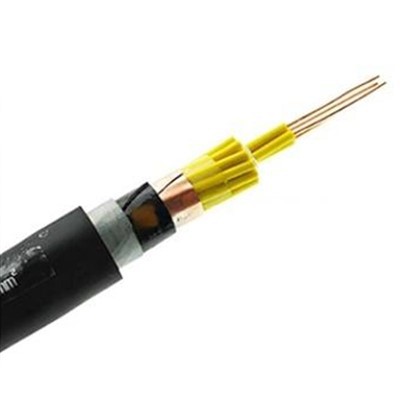
First, let’s get clear on why insulation resistance matters for mining cables specifically. Unlike standard building wiring, mining cables are built to handle extreme conditions: they’re oil-resistant, flame-retardant, and reinforced with heavy jackets to stand up to dragging on rocky ground or being pulled through underground entries. But over time, even the best cables degrade. Abrasion from rock, exposure to mining chemicals like hydraulic fluids, and thermal cycling (when cables heat up from heavy use and cool down between shifts) all break down the insulating material—usually cross-linked polyethylene (XLPE) or ethylene propylene rubber (EPDM) in mining-grade cables. When insulation resistance drops, electricity can leak to the cable’s outer jacket or ground, risking electric shock, igniting methane in underground mines, or tripping power supplies so frequently that production grinds to a halt. That’s why measuring insulation resistance isn’t a one-time test after installation; it’s a regular maintenance task, just like checking tire pressure on a haul truck.
Before you grab any tools, there are a few non-negotiable pre-test steps to make sure your measurement is accurate—no cutting corners here. First, safety is non-negotiable. Always lock out and tag out the power supply to the cable you’re testing, and confirm with a multimeter that there’s no live voltage present. Mining sites have strict OSHA standards for electrical safety, and ignoring this step is not worth the risk to your team. Next, prepare the cable: if it’s installed, disconnect it from all equipment (motors, switchgear, junction boxes) because any connected components will skew the resistance reading. For long runs, straighten out the cable as much as possible—coils or tight bends can create capacitance that messes with test results. Finally, clean the cable’s conductor and insulation ends. Mining dust is conductive, and a layer of grime on the cable’s ends will add fake resistance or create short circuits during testing. We keep isopropyl alcohol and lint-free wipes in every maintenance kit for this exact reason; a quick wipe takes 60 seconds and saves you from wasting time on bad data.
Now, the main event: choosing the right tester. A lot of folks new to mining electrical work reach for a cheap multimeter, but that’s a mistake. Insulation resistance for mining cables is measured in megaohms (MΩ), and the required test voltage depends on the cable’s rating—here’s where matching the tester to the cable is critical. For low-voltage mining cables (up to 1,000V, common for powering tools and small conveyors), use a 500V or 1,000V insulation resistance tester (also called a megohmmeter, or megger). For medium-voltage cables (1,000V to 15,000V, used for large drill rigs and main conveyor lines), you’ll need a 2,500V or 5,000V megger. I’ve seen operators use a 1,000V tester on a 10,000V cable and get a false high resistance reading, leading them to miss a dangerous insulation flaw—don’t make that call. Also, make sure your megger is calibrated within the last 12 months. Out-of-calibration testers are a common source of bad data on mine sites, and OSHA will call you out on that during inspections.
Once you have the right tester, the actual measurement process is straightforward, but how you connect the leads matters a lot. Let’s break it down for a typical three-phase mining power cable, the kind you’ll find powering conveyor systems: first, identify the three phase conductors (let’s call them L1, L2, L3) and the ground conductor (E, for earth). Most mining cables have a outer ground braid or insulated ground core, so confirm which is which with a continuity tester before starting. Now, for the first test: measure the insulation resistance between one phase conductor and the ground. Connect the megger’s positive lead to L1, the negative lead to the ground conductor or outer braid, and then press the test button. Hold the test for a full minute—this is key. Insulation resistance isn’t an instantaneous number; it’s a result of the insulation absorbing the test voltage over time. Many low-quality testers give a 10-second reading, but that’s wrong for mining cables. The 1-minute value is the standard for assessing long-term insulation health. Write that number down, and repeat the process for L2 to ground, then L3 to ground.
Next, test the insulation resistance between phase conductors, not just to ground. This is equally important because a fault between two phases can cause a short circuit even if the ground insulation is fine. For L1 to L2, connect the megger positive to L1, negative to L2, hold for 1 minute, and record. Do L1 to L3 and L2 to L3 the same way. Finally, if your cable has a separate insulation shield (common on medium-voltage mining cables), test the shield to ground, and each phase to the shield. The shield is a key barrier for high-voltage cables, and a fault there can cause flashovers that are deadly.
Now, what do the numbers mean? This is where supplier experience beats textbook knowledge. Most maintenance manuals will tell you the minimum insulation resistance for mining cables is 1 MΩ per kV of rated voltage. Wait—let’s translate that for real use. A 480V mining cable (low voltage) needs a minimum of 0.48 MΩ, but in my 12 years, I’ve found that any cable under 5 MΩ for low-voltage or 10 MΩ for medium-voltage is at high risk of failure. Why the gap? Because that 1 MΩ per kV number is a bare minimum for new cables straight out of the box. For cables that have been dragged on rock, exposed to water, or in use for 2+ years, you want a buffer. If you measure a reading below that threshold, don’t just slap a new cable in—do a polarization index (PI) test. The PI is the ratio of the insulation resistance at 10 minutes to the resistance at 1 minute. A PI below 1.5 means the insulation is contaminated or damaged; above 2.0 means it’s still in good shape. We teach all our clients to run the PI test when readings are borderline because it tells you if the low resistance is from surface dirt (which you can clean off and re-test) or actual internal insulation damage (which means replacement is needed soon).
Let’s add a real example to make this concrete. Last year, a client in northern Alberta called us panicking because their underground conveyor cable kept tripping the breaker every other shift. They’d tested it with a cheap multimeter and thought it was fine, but when we went out with a calibrated 1,000V megger and cleaned the cable ends, we got a 1-minute reading of 0.7 MΩ for a 480V cable—way below our 5 MΩ threshold. We did the PI test and got a ratio of 1.2, which confirmed internal insulation damage from the cable being dragged over sharp rock during installation six months prior. We supplied them a custom-length mining cable rated for extra-abrasion environments, and they haven’t had a trip since. That’s the difference between doing a test right and guessing.
Common mistakes I see operators make all the time: skipping the 1-minute test, not disconnecting the cable from equipment, testing while the cable is still warm, and using a test voltage that’s too low. If you test a cable right after it’s been running, the heat can break down surface moisture or dust, giving a falsely low reading. Let the cable cool to ambient mine temperature (usually a few hours, depending on length) before testing, and always record the ambient temperature when you test—insulation resistance drops 10-20% for every 10°C increase, so a reading at 30°C is different from the same reading at 10°C.
Now, for the final step: documenting everything. Mining is a regulated industry, and mine safety inspectors will ask for records of insulation resistance tests. We tell our clients to create a spreadsheet for each cable run, noting the cable ID, date of test, ambient temperature, test voltage, 1-minute resistance, PI, and any notes (like if the cable was exposed to water or dragged that week). This helps you spot trends over time—if a cable’s resistance drops 20% every month, that’s a sign it’s degrading faster than normal, and you can plan to replace it before it fails.

At the end of the day, measuring insulation resistance for mining cables isn’t rocket science, but it requires attention to detail, the right tools, and an understanding of how mining environments are different from any other. If you’re working with mining cables, don’t rely on generic guides—use the standards built for our industry, and when you need custom cables that are built to pass these tests even in the harshest conditions, don’t hesitate to reach out to discuss your requirements.
Instrumentation Cable References:
- National Fire Protection Association (NFPA) 70: National Electrical Code, Article 547 (Mining Machines)
- International Electrotechnical Commission (IEC) 60502-1: Power cables with extruded insulation and their accessories for rated voltages from 1 kV (Um = 1.2 kV) up to 30 kV (Um = 36 kV) – Part 1: Cables for rated voltages of 1 kV (Um = 1.2 kV) and 3 kV (Um = 3.6 kV)
- Mine Safety and Health Administration (MSHA) Electrical Safety Standards, 30 CFR Part 18
- IEEE Std 43-2018: IEEE Recommended Practice for Testing Insulation Resistance of Rotating Machinery
Shenhua Electric Group (Anhui) Co., Ltd.
As one of the most experienced mining cables manufacturers in China, featured by quality products and low price. Please rest assured to wholesale customized mining cables made in China here from our factory. For quotation, contact us now.
Address: No. 10, Jingjiu Road, Economic Development Zone, Tianchang City, Anhui Province
E-mail: 421300254@qq.com
WebSite: https://www.cnshcable.com/
