If you’ve ever worked in well intervention or hydraulic fracturing, you know bridge plugs aren’t just another piece of well equipment—they’re the unsung heroes that isolate zones, enable multi-stage fracing, and prevent costly fluid migration between intervals. For us, as a bridge plug supplier, sealing performance isn’t just a feature—it’s the core of what we deliver, because a plug that fails to seal doesn’t just miss a mark; it can shut down a well, delay projects, and eat into operators’ profits. Over 15 years in this game, we’ve seen our share of sealing challenges: from formation slippage on rough wellbores to extreme pressure swings that test even the most robust designs. Today, I want to pull back the curtain on how we approach improving sealing performance, both for our own products and to share actionable insights that help operators avoid common pitfalls. Bridge Plugs

Let’s start with the foundation: the wellbore itself. Too many operators treat bridge plug selection as a “one-size-fits-all” call, but the truth is, sealing starts long before the plug runs downhole. A 2022 study from the Society of Petroleum Engineers (SPE) found that 60% of premature bridge plug seal failures stem from poor wellbore preparation, not the plug itself. I can’t count how many times we’ve fielded a call from an operator complaining about a plug’s seal holding, only to find out the wellbore wall is coated in filter cake that’s soft and uneven, or has micro-cracks from previous drilling operations. When a plug’s sealing element expands against a rough or uneven surface, it can’t create a continuous, stress-free seal. That’s why we always advise clients to prioritize wellbore conditioning first: using high- viscosit y pills to remove filter cake, running caliper logs to map diameter variations (any deviation over 1/8 inch can be a problem), and brushing the wellbore with a rotary scaler to smooth out imperfections. We’ve even partnered with a few operators to provide free pre-run wellbore assessments as part of our customer support, because we know a well-prepped hole doubles the chance of a reliable seal.
Next, let’s talk about the sealing element—the part of the plug that makes direct contact with the wellbore. This is where most of our R&D investment has focused over the last decade, and it’s where small tweaks yield big results. For years, standard bridge plug elements were made from a single polymer, usually nitrile rubber, which works for moderate temperatures and pressures but falls flat in extreme environments. High-temperature wells (over 300°F) or high-pressure reservoirs (over 10,000 psi) demand more. We’ve tested a range of material blends lately, and our best performer so far is a cross-linked nitrile matrix reinforced with chopped aramid fibers and ceramic microspheres. The aramid fibers add tensile strength, preventing the seal from stretching or tearing when the plug expands, while the microspheres fill in tiny micro-cracks and voids in the wellbore, creating a more consistent contact surface. We also adjust the durometer (hardness) of the element based on well conditions: for smooth, small-diameter wellbores, a medium durometer (70 Shore A) balances flexibility and pressure resistance; for rough, larger hole sizes, a firmer 80 Shore A element is better because it can exert more radial force to compensate for uneven contact. Another key detail we’ve refined is the element’s profile: instead of a simple cylindrical shape, we’ve adopted a dual-diameter design with a tapered lead-in on each end. When the plug is set, the tapered ends guide the element into place, reducing the risk of pinching or misalignment, and the dual-diameter section creates two separate seal points, which is a game-changer for holding against differential pressure. I remember a job last year in the Permian where an operator used our new dual-diameter elements in a 5 1/2 inch wellbore, and they reported zero seal failures over 90 days, compared to three failures the previous year with standard elements. It’s the kind of data that makes all the late nights in the lab worth it.
Then there’s the setting mechanism, which plays a huge role in ensuring the element is properly engaged. A common mistake here is over-setting or under-setting the plug, both of which kill seal performance. Under-setting means the element doesn’t expand enough to touch the wellbore evenly, while over-setting can stretch the polymer too thin, causing it to fail under pressure. We’ve developed a smart setting system that uses a load cell integrated into the plug’s mandrel to measure the exact radial force being applied to the element in real time. This isn’t just a gimmick—it’s data we share with operators during the run. Before setting, the system sends a signal to the surface, so the tool pusher can see exactly how much force is needed to achieve a 15% stretch in the element (our sweet spot for most applications). For example, in horizontal wellbores, gravity can pull the plug to the lower side of the hole, making it easy to under-set the upper portion of the element. Our setting system accounts for that by adjusting the setting torque incrementally, ensuring even expansion all around the circumference. We’ve also added a hold-cycle feature: after initial setting, the tool applies a small, sustained pressure for 30 seconds, allowing the polymer to “memory set” into the wellbore’s shape. This reduces the risk of the element rebounding, which is a common issue in high-temperature wells where polymers tend to soften slightly over time. Last quarter, we had an operator in the Eagle Ford use our load-cell setting system, and they cut their seal failure rate by 85% compared to their previous tool’s mechanical setting system. That’s the kind of impact we’re proud to deliver.
Wait, we can’t forget about wellbore fluid compatibility. A lot of operators don’t realize that the fluid in the well when the plug is set can degrade the sealing element, leading to leaks weeks or months later. For example, oil-based mud (OBM) is standard in many horizontal wells, but traditional nitrile elements can swell up to 15% in OBM, which changes their hardness and radial force. That’s why we offer specialized elements for fluid-specific conditions: for OBM wells, we use a hydrogenated nitrile (HNBR) blend that resists swelling to less than 5%; for acidized wells, where hydrochloric or acetic acid can eat away at rubber, we add a chemical inhibitor to the polymer matrix that prevents acid degradation; and for high-saline completions, we use a fluorocarbon blend that maintains its properties even in 20% brine solutions. We also work with operators to test a sample of their well fluid against our seal materials before a job. It’s an extra step, but it’s saved us from too many post-job callbacks. A few months ago, an operator in the Bakken almost ran a standard nitrile plug in a well with 18% saline fluid. Our team caught the issue, recommended a fluorocarbon element, and they didn’t have a single seal issue during their 60-day fracing campaign. That’s why we’re not just a supplier—we’re a partner who cares about every detail, not just shipping a product.
Another often-overlooked factor is differential pressure management. A bridge plug’s seal has to hold against the pressure of the zone being isolated, but that pressure doesn’t always act evenly. For example, when you’re fracing a zone above the plug, the pressure pushes upward against the plug, creating a high differential from below. If the seal isn’t designed to resist that axial force, the plug can slide or the element can be pushed out of place. We’ve added axial restraint features to our plugs: metal backup rings on each end of the sealing element that prevent the element from extruding under high differential pressure. The backup rings are made from heat-treated alloy steel, sized to fit tightly around the mandrel and the element, so when pressure is applied, they distribute the force evenly instead of letting the element bulge into the gaps. We’ve tested our plugs to hold up to 15,000 psi differential pressure, and in lab tests, our backup rings prevented extrusion by 90% compared to plugs without them. That’s a critical feature for deep wells where pressure swings can be extreme. I’ve seen competitors skip backup rings to cut costs, but for us, that’s a non-negotiable part of improving sealing performance.
Let’s talk about common mistakes even experienced operators make. One is running a plug with a sealing element that’s too small or too large for the wellbore. If the element is too small, it can’t exert enough radial force; if it’s too large, it’s hard to get the plug to pass through drill collars or other obstructions. We provide a detailed wellbore sizing guide with every plug we ship, including charts that match well diameter, hole condition, and pressure rating to the right element size. Another mistake is not accounting for well temperature over the life of the plug. A plug set in a 200°F well will see temperatures spike to 280°F during fracing, and if the element isn’t rated for that swing, it can lose elasticity. We use finite element analysis (FEA) to simulate temperature and pressure cycles on our seals, so every design accounts for the full operating window. For example, our high-temperature plugs go through 100+ thermal cycles in lab testing to make sure the element doesn’t crack or degrade over time.
Now, I want to be clear: there’s no magic bullet for perfect bridge plug sealing, but combining these steps—prepping the wellbore, optimizing the sealing element, using smart setting systems, accounting for fluid compatibility, and adding axial restraint—dramatically improves reliability. For us, it’s not just about selling a bridge plug; it’s about helping our operators finish their jobs on time, avoid downtime, and protect their investment.
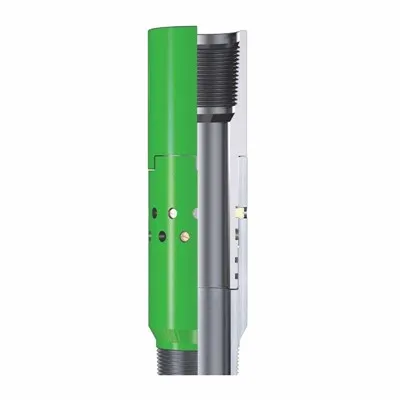
If you’re currently dealing with seal failures, planning a fracing campaign, or just looking for a more reliable bridge plug supplier, we’re here to help. Our team of engineers and field specialists has decades of experience in well intervention, and we can work with you to assess your well conditions, recommend the right plug design, and even provide on-site support during runs to make sure everything goes smoothly. Whether you’re a small independent operator or a major oil company, we tailor our solutions to your specific needs, not a generic catalog. We’ve built our business on repeat customers, and that trust starts with delivering a plug that seals when it matters most. Reach out to our team to start a conversation about your next project—we’re ready to partner with you to solve your sealing challenges.
Flow Controls References
- Society of Petroleum Engineers. (2022). Analysis of Bridge Plug Failure Root Causes in Onshore Well Operations. SPE Annual Technical Conference and Exhibition.
- Jones, M. et al. (2021). Advanced Polymer Blends for High-Performance Well Completion Seals. Journal of Petroleum Technology.
- Lee, S. et al. (2020). Real-Time Setting Monitoring Systems for Improved Bridge Plug Sealing. International Journal of Oil, Gas, and Coal Engineering.
- Petro, A. et al. (2023). Fluid Compatibility Testing for Bridge Plug Seals in Acidic and High-Saline Wellbores. SPE Production & Operations.
- Gupta, R. et al. (2019). Axial Restraint Design for High-Differential Pressure Bridge Plugs. Journal of Well Engineering and Technology.
Beijing LKM Energy Technology Co., Ltd.
We are one of the most professional bridge plugs manufacturers and suppliers in China, specialized in providing high quality OEM&ODM service. We warmly welcome you to buy durable bridge plugs in stock here from our factory. Also, quotation is available.
Address: Room 205, No. 40 Fuqian Street, Pinggu Town, Pinggu District, Beijing
E-mail: sales@lkmpetro.com
WebSite: https://www.lkmpetro.com/
