Hey everyone, let’s cut to the chase—if you’re in the market for watch boxes (or even just a watch nerd like me who’s accumulated way too many timepieces over the years), you’ve probably stared at a bunch of options and thought: what’s the actual ideal size here? Not too tiny that your best vintage Rolex gets squished, not so big that it’s just collecting dust on a shelf like an unused storage unit. As someone who’s been in the watch box case supplier game for over a decade, I’ve talked to collectors, casual wearers, even folks who buy these as gifts, and the answer’s not one-size-fits-all (pun totally intended). Let’s break this down without the boring jargon, yeah? Watch Boxes Cases
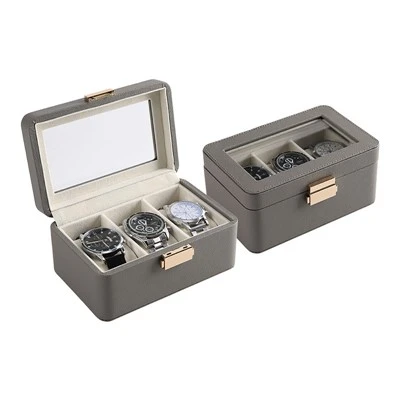
First, let’s start with the most common use case because that’s where 90% of our customers land. Let’s be real—how many watches does the average person actually own? I’m not talking about the guy who has 50 Submariners stashed away, I mean the regular person who’s got a daily beater, a nice watch for weddings, one for hiking, maybe a family heirloom. That’s 3 to 6 watches, right? Wait, hold on—don’t sleep on the “casual collector” gap. There are so many people who don’t want a tiny 2-slot box that’ll run out of space after Christmas, but also don’t need a massive 20-slot wall-mounted cabinet that takes up half their closet. Let’s do the math here (super simple, promise): a standard watch slot is roughly 8 inches wide, 4 inches deep, and 3 inches tall for most modern watches. Vintage or oversized pieces (like big dive watches or smartwatches) might need an extra inch in height or width. So a 4-slot box isn’t just holding 4 watches—it’s sized so each has enough breathing room, no scratching against each other.
Wait, but why is that breathing room thing such a big deal? I’ve had customers tell me they bought a cheap 6-slot box from a big-box store, and by the third month, two watches had tiny scratches on their cases because they were crammed together. That’s the last thing you want, right? A watch is an investment—whether it’s a $100 Timex or a $10,000 Rolex. So size isn’t just about how many watches fit, it’s about fit that protects them. That’s where a lot of suppliers drop the ball, by the way—they cut corners on slot spacing to make their boxes seem like more of a deal, but you end up paying for it later with damaged watches.
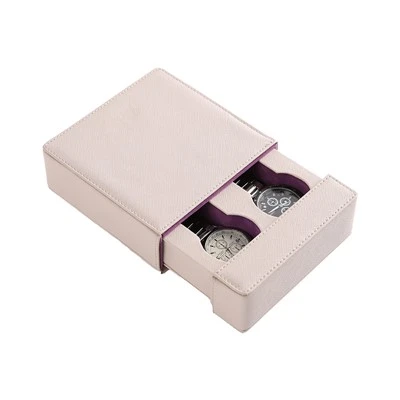
Now, let’s split this into different categories because not everyone’s needs are the same. Let’s start with the “everyday wearer” crew. If you rotate watches weekly—your go-to for work, a casual weekend one, a dress watch for date nights—you don’t need something massive. A 3- to 5-slot box is perfect here. It’s compact enough to toss in a closet or on a nightstand, not too heavy to carry if you’re traveling (wait, another point: travel watch boxes are a whole separate thing, but even those have ideal sizes). Wait, travelers—if you’re going for a weekend trip, a 2-slot hard-shell travel box is ideal, right? It fits in your carry-on, protects your watches from being jostled in a suitcase, not so big that it takes up half your bag. For longer trips, maybe a 4-slot if you’re bringing more timepieces, but anything beyond that is overkill for travel.
Then there’s the hobbyist collector. These are the people who’ve got a growing collection—maybe 8 to 12 watches, trading up, hunting for specific models. What’s the ideal size here? A 8- to 10-slot box, or even a modular one that you can add slots to later. Oh, modular is a game-changer for this group. I’ve had so many collectors come to us saying they started with a 4-slot, then added a few more, and wished they’d gone modular from the start. The key here is, for collections this size, you want a box that’s sturdy enough to hold all that weight (watches add up—each is at least a couple ounces, so 10 is a pound or more) but not so big that it’s impossible to arrange nicely on a shelf. A common mistake here is going for 15+ slots before you even have 10 watches, and then you’re just staring at empty slots that look weird and don’t protect the watches you do have because they’re sliding around.
Wait, what about people who buy watch boxes as gifts? That’s another big segment. A lot of folks want to get a watch box for their partner or a friend who’s getting into watches. The ideal size here is usually a 4- or 6-slot. Why? It’s enough space to grow into—they can add more watches later without needing a new box right away—but it’s not overwhelming for someone who’s just starting out. I’ve seen people buy a 2-slot as a first gift, and then within a year the collector’s like “can I get a bigger box?” So gifting that little extra breathing room is a win.
Now, let’s talk about the factors that change this up, because ideal size isn’t just about number of watches. First: watch size itself. If you’ve got a bunch of smartwatches (like Apple Watch or Samsung Galaxy Watch), those are wider than standard mechanical watches, so your slot size needs to adjust. We make boxes that have adjustable slots for that—so you can fit a 44mm Apple Watch or a 38mm Rolex Submariner in the same box without cramming. If you have vintage watches that are thinner or smaller, you can get away with more compact slots, but most people today have standard or oversized, so we build our boxes to accommodate that.
Second: where you’re putting the box. If you’re tucking it on a tiny nightstand in a studio apartment, a 2-slot or 4-slot is the only way to go—anything bigger will stick out like a sore thumb. If you’ve got a dedicated watch room or a big shelf in your closet, a 12-slot or even a 16-slot display box works, because you’re using it as a showpiece too. Display boxes (the ones with glass tops) are another thing—their size is a bit different because you want to be able to see all your watches, so slot spacing is a bit wider to avoid glare or overlapping.
Third: portability. If you’re buying a box to move watches around, or take to watch meets, size matters for weight and bulk. A hard-shell travel box maxes out at 8 slots for most people—anything more is too heavy to carry comfortably. Soft travel pouches are 1 or 2 slots, good for day trips or short travel.
Wait, let’s get real here—what’s the mistake everyone makes? Buying the biggest box they can afford before they even have the watches to fill it. I’ve heard so many stories: someone buys a 12-slot box because they think “one day I’ll have 12 watches,” and a year later they only have 5, so they’re wasting space, and the watches they do have are sliding around in the empty slots. Or they buy a cheap big box, and the wood is flimsy, so when they move it, all the watches shift and scratch. The sweet spot is matching the size to your current collection, with a little room to grow—like 2 extra slots max. That way you don’t overbuy, and you don’t have to run out and get a new box in 6 months.
Let me throw in a quick example from our shop to make this concrete. Last month, we had a customer come in—guy in his early 30s, said he just got his first nice watch, a Tag Heuer, plus he had a Timex and a Casio he wore every day. He was eyeing our 6-slot box, but almost went for the 10-slot “because it was a better deal per slot.” We talked him into the 4-slot with adjustable slots, and a note that when he adds his next watch, he can trade it up for a 6-slot for a small discount. A week later he emailed us saying he was stoked—fit all three watches perfectly, and had a little room for his upcoming birthday watch. That’s the ideal size call, right? Listening to your actual current needs, not the “deal” of a bigger box.
Another example: a collector who’s been at it for 5 years, has 9 watches, all high-end mechanicals. He came to us needing a new display box because his old one was cramming them together, causing scratches. We suggested an 8-slot display box with extra slot spacing—perfect, because he could see every watch, no risk of scratching, and if he adds one more, he has space. He didn’t need a 12-slot, because he didn’t want it to take up more space on his shelf than it needed to.
Wait, also—don’t sleep on the difference between storage boxes and display boxes. If your watch box is just for tucking away watches you don’t wear, you can go a bit more compact, but if it’s on display, you want the size to fit your space and let each watch shine. That’s a big one for people who treat their watches as part of their decor.
Let’s wrap this up so it’s not just a list—what’s the actual formula here for the ideal size? Let’s make it simple:
- Count how many watches you own right now (include all types: mechanical, smart, vintage, whatever)
- Add 1 to 2 slots for growth (no more—trust me)
- Adjust for watch size: if most are over 42mm (or smartwatches), make sure slots are adjustable; if vintage or small, you can stick to standard slots
- Consider where you’re putting it: nightstand = small, shelf = medium/large, travel = small
Oh, and one last thing that a lot of people overlook: quality vs. size. A smaller, sturdier box that protects your watches is way better than a huge, flimsy box that holds 10 watches but lets them scratch. We’ve had customers trade up with us because they bought a big cheap box, and their watches got damaged—they’d have been better off with a smaller, higher-quality one in the first place.
At the end of the day, the ideal size is what works for you, not what’s trending or what seems like a good deal. You don’t need the biggest box on the market, you need the one that fits your current collection, leaves a little room to grow, and keeps your watches safe. If you’re still not sure what size is right for your needs—whether you’re building a small collection, expanding a hobby, or looking for a gift—we’re here to help. No pressure, no salesy push for the biggest box we have. Just honest advice to get you the right watch box case for your timepieces.
If you’re ready to browse options or chat through your specific needs, reach out to us to connect and talk through what’ll work best for your watches and your space. We’ve got options for every collection size, from 2-slot travel boxes to 16-slot display cases, all built to keep your timepieces safe and looking good.
Jewelry Boxes References:
- Watch Industry Insights, 2023: Consumer Trends in Timepiece Storage Solutions
- Journal of Jewelry and Watch Conservation, 2022: Optimal Storage Dimensions to Prevent Watch Case Scratching
- Retail Watch Association, 2024: Buyer Preferences for Watch Box Size and Portability
Shenzhen Yingbosang Crafts and Gifts Limited
Shenzhen Yingbosang Crafts and Gifts Limited is one of the most professional watch boxes cases manufacturers and suppliers in China, also supports customized service. Please feel free to wholesale bulk premium watch boxes cases made in China here from our factory. For quotation, contact us now.
Address: No.8, Ruiji Road, Nanlian Community, Longgang, Shenzhen, Guangdong, China
E-mail: andyzeng@ybsgroup.cn
WebSite: https://www.ybsbox.com/
