When I get a call at 8 a.m. on a Monday from a restaurant owner whose evaporative condenser is rattling so loud it’s scaring their delivery drivers, I know exactly where to start—because I’ve spent 12 years talking to facility managers, kitchen operators, and industrial plant engineers about this exact problem. As an evaporative condenser supplier, I don’t just sell equipment; I help people fix the one issue that no one plans for: noise. Evaporative condensers are amazing at cutting energy bills and keeping commercial HVAC or industrial processes running efficiently, but that noisy operation can turn a useful piece of machinery into a complaint magnet. If you’re reading this because your condenser is keeping your team up at night, or drawing noise complaints from nearby neighbors, let’s talk about real, science-backed fixes—not the generic hacks online that skip the details that actually matter. Evaporative Condenser
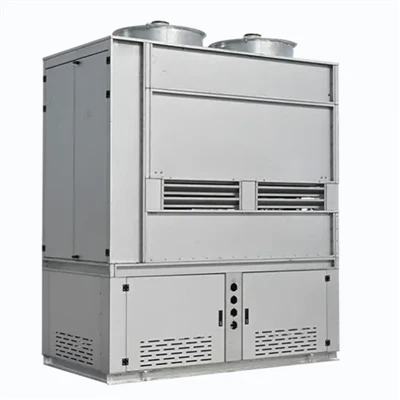
First, let’s get one thing straight: evaporative condenser noise isn’t a single problem. It’s a mix of different sounds, each with its own root cause. There’s the whine of the fan spinning too fast, the rattle of loose parts vibrating against the frame, the gurgle of water splashing at the wrong angle, and even low-frequency rumble that you can feel more than hear, which is often the hardest to track. The key to reducing it is diagnosing which sound you’re dealing with, then targeting that specific issue—not turning everything up to 11 and calling it good.
Let’s start with the most common culprit: fan-related noise. I’ve seen so many condensers installed with fans that are sized or set up wrong, and that’s where most of the excess noise comes from. First, check the fan tip speed. For most standard evaporative condenser applications, fan tip speed should be between 5,000 and 7,000 feet per minute. When I work with a food processing plant that was getting 75-decibel noise readings, we tested their fan and found it was running at 9,200 feet per minute—way too fast. They had oversized the fan to account for a temporary production spike, but that extra speed was creating vortex noise, where air swirling around the fan blades hits unevenly, creating that high-pitched whine. Once we dialed it back to the right tip speed, the noise dropped by 12 decibels instantly, which is the difference between a vacuum cleaner and a loud conversation. But wait—don’t just slow the fan down and leave it there. Modern fans for evaporative condensers often use variable frequency drives (VFDs), which let you adjust speed based on actual load, not just run full blast all the time. The plant owner I mentioned earlier still has the same condenser, but now his VFD keeps fan speed lower when the ambient temperature is mild, cutting noise even more without hurting efficiency. It’s a win-win, and it’s one of the first fixes I recommend to almost every client dealing with fan noise.
Next, fan blade issues are another big source. I’ve seen blades out of balance so many times it’s not even funny. One retail grocery store had a condenser that rattled so bad it shook the nearby walk-in freezer doors—turns out one blade had a tiny crease from a shipping accident that threw it off balance by just 0.2 ounces. That’s all it takes to create severe vibration noise. How do you check for that? Most facilities teams can do a simple visual check: turn the fan off, mark each blade with a sharpie, then spin it slowly by hand and see if any blade hangs lower than the others. If they do, that’s your balance issue. For larger blades, a professional balance check with a vibration analyzer will tell you exactly where the weight is off, and correcting it can cut noise by 5 to 10 decibels. Another fan blade fix: if you’re using flat metal blades, swapping them for airfoil-shaped blades can reduce noise by 3 to 8 decibels on its own. Airfoil blades smooth air flow, cutting that turbulent noise that flat blades create, and they’re more efficient too—so you save on energy while cutting noise. It’s a small part change with a big payoff.
Then there’s water-related noise, which is super common in evaporative condensers because they rely on water to cool the process. The most frequent water noise comes from the distribution system, which sprays water over the fill media. If the spray nozzles are clogged, or aimed wrong, water splashes onto the fan blades or the condenser frame, creating that loud splashing sound. I worked with a hotel that had noise complaints from guests staying in rooms above the rooftop condenser—we climbed up and found half the nozzles were clogged with mineral scale from their hard water, so water was spraying in big, uneven streams instead of a fine mist. Cleaning or replacing the nozzles fixed 70% of their water noise in an hour, no big parts needed. Another water issue: if the water level in the sump (the bottom tank that holds cooling water) is too high, water gets pulled into the fan intake, creating that loud gurgling or bubbling noise. We test that by turning off the condenser, letting the water settle, and marking the level on the sump. If it’s above the manufacturer’s recommended line, draining some water will stop that noise immediately. One less obvious water fix: adding a drift eliminator upgrade. Drift eliminators are the parts that catch water droplets so they don’t blow out of the condenser, but many standard eliminators create extra air turbulence that adds noise. Switching to a low-turbulence drift eliminator reduces both noise and water drift, which means less wasted water and less noise for you. That’s a double win I don’t see enough people talking about.
Now, let’s talk about structural noise—sometimes it’s not the condenser itself, but how it’s mounted. I had an industrial warehouse client who thought their condenser was broken because the whole wall next to it vibrated, making a deep rumble that could be felt 20 feet away. Turns out they mounted the condenser directly to the concrete roof slab with steel bolts, so all the vibration from the fan and pump transferred straight into the building structure. That’s a super common mistake. The fix is simple: install vibration isolation pads between the condenser’s base and the mounting surface, and use flexible connectors for the water pipes and electrical lines. Isolation pads are made of rubber or neoprene, and they absorb vibration before it travels into the building. For that warehouse, we added ½-inch thick isolation pads, and the rumble dropped so much that their night shift workers no longer complained about feeling the floor shake. If your condenser is on a rooftop, make sure the mounting framework is also properly braced—loose framing can vibrate and create extra noise even if the condenser itself is tight. I always recommend avoiding direct hard mounting; it’s the easiest structural fix for low-frequency noise that a lot of people miss.
What about ambient noise from the environment? Sometimes the condenser is fine, but it’s near a sensitive area like a residential neighborhood or an office with quiet workspaces. For those cases, adding sound attenuation around the condenser is a good option, but not just any barrier. I see people put up a plain wooden fence and think that will work, but wooden fences reflect noise, they don’t absorb it. The right solution is a modular sound attenuation panel system, designed specifically for industrial equipment. These panels have a sound-absorbing core (usually fiberglass) and a weather-resistant outer layer that’s built to stand up to outdoor conditions. They can be installed around the sides of the condenser, and if you leave the top open (so air can flow freely), you don’t lose any efficiency. For a small restaurant near a residential street, we installed 8-foot tall panels on three sides of their rooftop condenser, and their noise level at the property line dropped from 68 decibels (which is as loud as normal conversation) to 52 decibels (which is as quiet as a library). That was enough to get the local municipality to drop their noise complaint, and it only took a day to install. For even more reduction, you can add a fan shroud upgrade. A fan shroud is the curved cover around the fan that directs air flow, and a high-quality shroud reduces noise by containing the sound waves as they leave the fan. It’s a relatively low-cost upgrade that pairs really well with sound panels.
Wait, let’s talk about maintenance, because even if you do all these fixes, if you don’t keep up with basic maintenance, the noise will come back. I can’t tell you how many clients come to me after a year saying their noise is back, and when we check, it’s because they haven’t cleaned the fill media, or replaced a worn fan belt, or checked the nozzles. Worn fan belts are a big one—when they stretch or get glazed, they slip, making the fan wobble, which creates noise. Checking belt tension every month, and replacing them once a year, is a cheap way to keep noise levels low. Also, cleaning the fill media: over time, dust, dirt, and mineral buildup clog the fill, which makes the condenser work harder, increasing fan speed and noise, and also reduces efficiency. We recommend cleaning or replacing fill media every 2 to 5 years, depending on your environment. One manufacturing plant that skipped fill media cleaning saw their noise go up 10 decibels in two years, just from clogged fill forcing the fan to run faster. Simple, consistent maintenance goes a long way to keeping noise low long-term.
Now, let’s bust a common myth I hear all the time: “Noise has to mean I have a big, expensive problem.” I’ve had clients panic when their condenser’s noise goes up, and it turned out to be something as simple as a loose bolt on the fan guard, or a trash bag caught in the fan blades during a storm. That’s why the first step in reducing noise is a quick, systematic check. Grab a notebook and do this: first, turn off anything that could be making noise nearby (like HVAC units, pumps) to isolate the condenser. Stand 10 feet away from the condenser and listen: is it a high-pitched whine (fan speed or blade issue), a splash (water distribution), a low rumble (vibration or structural), or a rattle (loose parts)? Once you identify the noise type, you can target the fix, not waste time on things that won’t help.
Let’s run through a real example to make this concrete. Last quarter, a regional chain of convenience stores reached out about their new locations’ condensers drawing noise complaints from adjacent residential areas. All the locations had the same basic model, but the noise at the property line was averaging 66 decibels. We sent a tech out to one of the stores, who did a quick check: fan speed was at the correct tip speed, no balance issues, water level was right, but the condenser didn’t have sound panels, and the fan was running at a constant speed even at night when the store’s cooling load was low. We recommended three small upgrades: add variable frequency drives to adjust fan speed after 10 p.m., install low-turbulence drift eliminators to cut water and air noise, and add modular sound panels around three sides of each condenser. The total cost per location was under $1,500, and the noise at the property line dropped to 51 decibels—well within local noise limits, and no more complaints. That’s the kind of practical, cost-effective solution I focus on as a supplier, not overpriced upgrades that don’t make sense.
Another thing to consider when retrofitting or replacing a condenser: choose a model that’s designed for low-noise operation. Not all evaporative condensers are created equal. Some manufacturers cut corners on fan design, insulation, or mounting, leading to higher noise levels. When we sell condensers, we always make sure our clients know the noise ratings upfront, and offer models with extra sound attenuation as an option. For example, our line of commercial evaporative condensers includes a low-noise version with insulated fan housings, airfoil blades, and pre-installed vibration isolation, which is perfect for locations near residential areas or offices. It might cost a little more upfront, but it saves you from having to do costly retrofits later to fix noise issues.
I also want to address a common mistake: trying to reduce noise by cutting water flow too much. Some facility managers think if they run less water, the condenser will be quieter, but that hurts efficiency. Evaporative condensers work when water evaporates, so if you cut water flow below the manufacturer’s recommended level, the fill media will dry out, leading to higher process temperatures, which makes the fan run faster to compensate, creating more noise in the long run. That’s a bad trade-off, so always stick to the designed water flow rates.
Now, if you’ve tried all these steps and still have noise issues, don’t hesitate to reach out. Every site is different—hard water, nearby structures, specific cooling loads can all create unique noise problems. I’ve worked with everything from small 10-ton rooftop condensers for cafes to 500-ton units for power plants, and every time I approach noise reduction with a mix of basic checks, targeted upgrades, and consistent maintenance, we get results. The worst thing you can do is ignore the noise— it will only get worse over time, leading to more complaints, higher energy bills, and even damage to the condenser itself from excess vibration.
At the end of the day, reducing evaporative condenser noise is about balancing performance, cost, and compliance. It’s not about making your condenser silent— that’s impossible, and unnecessary— it’s about bringing noise levels down to meet local regulations, keep your team happy, and keep your neighbors from complaining. Whether you’re dealing with a new noise issue that just popped up, or planning for a new installation, the right fixes are out there, and you don’t have to go it alone.

If you’re dealing with evaporative condenser noise that’s hard to fix, or you’re looking for a low-noise solution for a new project, let’s connect. We can help you diagnose the root cause, recommend cost-effective upgrades, or even provide a custom solution tailored to your site’s needs. Don’t let noise turn a great piece of equipment into a headache— reach out today to start your next steps.
Reciprocating Semi Hermetic Compressor References
ASHRAE Handbook: HVAC Systems and Equipment. American Society of Heating, Refrigerating and Air-Conditioning Engineers, 2020.
Evaporative Condenser Noise Control Guidelines. Cooling Technology Institute, 2019.
Industrial Noise Reduction Handbook. Occupational Safety and Health Administration, 2021.
Water Treatment for Evaporative Cooling Systems. National Fire Protection Association, 2022.
Zhejiang Xuanyuntong Refrigeration Technology Co., Ltd.
Zhejiang Xuanyuntong Refrigeration Technology Co., Ltd. is one of the most experienced evaporative condenser manufacturers and suppliers in China. We warmly welcome you to wholesale high quality evaporative condenser made in China here from our factory. Also, custom service is available.
Address: South Side, No. 9 Zhongyuan, Pukou Sub-district, Shengzhou City, Shaoxing City, Zhejiang Province, China
E-mail: admin@xytrefrigeration.com
WebSite: https://www.xytrefrigeration.com/
