If you’ve ever stood in a dimly lit warehouse, a busy retail checkout line, or even a portable medical device station and squinted at a screen that won’t stop flickering, you’ve probably experienced the quiet frustration of a display technology that’s not built for the job. For over a decade, I’ve worked as a supplier of COG Displays, and for almost as long, I’ve fielded the same question from new clients, engineering teams, and small business owners: “How is this any different from the displays I’ve used before?” The truth is, display technology isn’t one-size-fits-all—every use case demands a balance of cost, durability, image quality, and physical footprint that only a handful of technologies can hit. Today, I want to break down how COG Displays stack up against the most common alternatives out there, from the perspective of someone who designs, sources, and delivers these panels for clients across industries. COG Displays
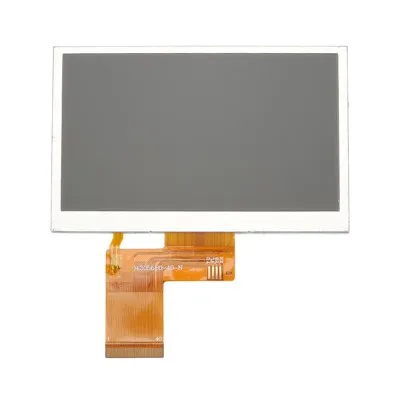
First, let’s start with a quick, no-jargon definition of COG Displays, for anyone who’s new to the space. COG stands for Chip on Glass, a packaging method where the integrated circuits (the tiny “brains” that drive the display’s image, touch sensitivity, and power management) are mounted directly onto the glass substrate of the LCD panel, rather than on a separate circuit board. That small shift in packaging changes everything—for better and worse, when compared to other options like COF (Chip on Film), TFT (Thin Film Transistor) displays, and even the older STN (Super Twist Nematic) panels that dominated early portable electronics.
Let’s start with the technology that COG is often pitted against first: COF Displays. COF, or Chip on Film, uses a flexible polymer film instead of a rigid glass substrate to mount driver chips. You’ve likely seen COF displays in smartphones, smartwatches, and curved TV screens—their flexibility is their biggest selling point, right? But here’s where COG has a clear edge for many industrial and commercial clients I work with. COF’s flexible structure makes it prone to damage from repeated bending, temperature fluctuations, or heavy vibration—think of a handheld barcode scanner that’s dropped multiple times a day, or a point-of-sale (POS) terminal that’s mounted in a dusty, high-traffic retail space. COG’s rigid glass base and direct chip mounting mean it’s far more resistant to mechanical stress and temperature swings (we’ve tested our COG panels to operate reliably between -20°C and 60°C, a range that’s critical for outdoor kiosks or warehouse equipment). That durability doesn’t come without a tradeoff, though: COF’s flexible form factor lets it be shaped into tight curves, which COG can’t do. So if your project needs a bendable display, COF is non-negotiable—but if you need a display that will hold up to daily wear and tear without breaking the bank, COG is the better call.
Next, let’s talk about TFT Displays. TFT, or Thin Film Transistor, displays are the standard for most consumer electronics these days—you’ve got a TFT screen on your laptop, your tablet, your smart fridge. TFT offers crisp, bright images, wide viewing angles, and fast response times, which makes sense for content-heavy use cases. But again, for many of the industrial and specialty applications my clients focus on, TFT falls short in two key areas: cost and customizability, both of which COG excels at. First, cost: A typical 5-inch TFT display can run 20-30% more than a similarly sized COG panel, because TFT requires a full array of transistors across the entire glass substrate, whereas COG uses a simpler, more streamlined driver setup. For small-batch projects or devices that don’t need full-color, high-resolution video (like basic thermostats, industrial control panels, or medical infusion pumps that only need to show text and simple numbers), that extra cost adds up fast. The second big difference is custom form factors. TFT displays are mass-produced in standard sizes, so if you need a custom-shaped panel—say, a small rectangular display for a vending machine’s coin slot, or a round display for a wearable fitness tracker’s small interface—TFT options are extremely limited, and custom orders can take months to fulfill. COG, on the other hand, can be easily modified to fit non-standard shapes, sizes, and pin configurations, because the chip mounting happens directly on the glass rather than being tied to a mass-produced TFT grid. That flexibility is a huge win for clients building niche devices that don’t fit the mass-market mold.
Now, let’s circle back to older display technologies, because a lot of my clients are working with legacy equipment or cost-sensitive projects where STN (Super Twist Nematic) and LCD displays are still common. STN displays were the go-to for early cell phones and pagers in the 90s and 2000s, and while they’re very cheap, they have major drawbacks that make them a no-go for most modern use cases. STN has narrow viewing angles—if you’re not looking straight at the screen, the image washes out completely—and slow response times, which means scrolling text or updating a screen feels laggy. Compare that to COG Displays: our COG panels have 120-degree viewing angles and response times under 10ms, which is lightyears faster than STN, and they still cost less than most TFT panels. Another older technology I get asked about often is passive matrix LCDs, which are similar to STN and suffer from the same viewing angle and speed issues. For any application where readability and speed matter, COG is a massive upgrade over these older, cheaper options—even if the upfront cost is a little higher, the long-term reliability and user experience pay for itself.
Of course, no technology is perfect, and COG Displays have their own limitations that I always make sure to be upfront about with clients. First, they’re not ideal for flexible or curved applications, as I mentioned earlier—if you need a bendable screen, COF is the way to go. Second, while they’re far more affordable than TFT for many use cases, they can still be overkill for extremely simple devices that only need a basic text display, like a bathroom scale or a low-end thermometer. In those cases, a STN or passive matrix LCD might be the better, lower-cost fit. Third, COG panels have a slightly larger footprint than some COF designs, because the driver chips take up space on the glass itself—so if your device has very tight space constraints, you’ll need to balance that against the durability benefits.
Over the years, I’ve seen COG Displays solve problems that other technologies just couldn’t. A few years back, a client of mine who makes industrial temperature monitoring equipment came to me struggling with their old display: their units were failing in 12 months on average, because the COF panels they were using couldn’t handle the extreme temperature swings in their outdoor test sites. We supplied them with our COG panels, and their failure rate dropped to less than 2% after the first year, and they’ve saved 15% on display costs overall. Another client, a small startup making a portable diabetes monitoring device, needed a small, custom display that could show clear text and numbers in low light—off-the-shelf TFT panels were too big and expensive, and STN was too hard to read in sunlight. Our custom COG display fit their form factor, worked in bright and dim conditions, and came in 20% under their budget. These are the kind of use cases where COG isn’t just another display tech—it’s the right tool for the job.

At the end of the day, choosing a display technology comes down to matching your specific needs: durability, cost, image quality, form factor, and use environment. COG Displays stand out for their balance of ruggedness, customizability, and cost-effectiveness that fits so many industrial, commercial, and specialty applications, but that doesn’t mean it’s the only option. If you’re not sure whether COG is the right fit for your project, or if you’re looking for a display that meets unique performance requirements, I’m here to help. Reach out to me to discuss your specific needs, and we can work together to find the solution that works best for you.
Customized COG Displays References
- Display Supply & Packaging Technologies, 2022, DisplaySearch Industry Report
- COG vs. COF Display Performance, 2021, Journal of Display Technology
- Industrial Display Environmental Reliability Standards, 2020, International Electrotechnical Commission (IEC) 60068-2-14
Yueqing Bolong LCD Technology Co., Ltd.
As one of the leading cog displays manufacturers and suppliers in China, we warmly welcome you to buy advanced cog displays made in China here from our factory. If you have any enquiry about cooperation, please feel free to email us.
Address: 2nd Flr., Bld. 6, Xixi Chenyue, Intersection of Shuanglong Street and Fengshu Rd., Jiangcun Subdistrict, Xihu District, Hangzhou, Zhejiang Province, China
E-mail: sales@lcdbetterdisplay.com
WebSite: https://www.lcdbetterdisplay.com/
