When you’re in the market for a large synchronous motor, let’s cut through the noise—most folks who reach out to me aren’t just looking for a “big motor.” They’re chasing something that doesn’t waste energy, holds up in tough industrial environments, and syncs perfectly with their existing systems. I’ve been supplying large synchronous motors for 12 years now, working with mining operations, power plants, and water treatment facilities, so I’ve seen the mistakes buyers make every single day. Let’s break this down like I’d explain it to a shop foreman who just called me panicking about their old motor dying mid-shift. Large Synchronous Motor
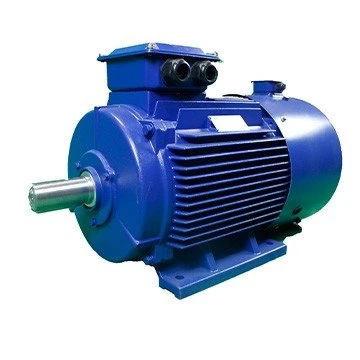
First, let’s talk specs that actually matter, not just the ones a sales sheet throws at you. The biggest mistake I see: buyers fixate solely on horsepower (HP) or kilowatts (kW) without checking their application’s actual load. A 500 HP motor won’t perform well if your process only needs 350 HP 80% of the time, because synchronous motors shine at variable loads, but you have to size them right. Wait, no—let me rephrase that: it’s not just about peak load, it’s about the load profile. If your mine’s conveyor belt runs at full capacity 12 hours a day and idle the rest, you don’t need a motor rated for that peak 12-hour stretch. You need one that can handle the startup torque too—because starting a loaded conveyor isn’t like pushing a lightbulb. That’s where synchronous motors beat induction motors, by the way: their power factor stays consistent, even when you’re running below full load, which saves you a ton on utility bills. I once had a copper mine client who switched from induction motors to our synchronous units and cut their power costs by 18% in the first quarter. That’s real money for a site running 24/7.
Next up: environment. If your motor’s going to live outside, or in a dusty cement plant, or a wastewater treatment plant where moisture’s a given, generic specs don’t cut it. You need to check the NEMA (National Electrical Manufacturers Association) or IEC (International Electrotechnical Commission) enclosure ratings. For dusty, dirty spots, NEMA 2 or IP55 is non-negotiable—any lower and dirt will work its way into the windings and fry the motor before its time. If it’s going in a chemically harsh area, like a chemical processing plant, you need corrosion-resistant coatings on the frame and shaft. I had a client in a fertilizer plant a few years back who went cheap on a motor without proper coating; it corroded through the drive end bearing in 8 months. We replaced it with a coated synchronous motor, and it’s still running strong 5 years later. Also, altitude matters if you’re above 3,300 feet. Thin air doesn’t carry heat as well, so a motor rated for sea level will run hotter, which shortens its life. You need a derated motor for high altitude—most suppliers can adjust that, but you have to ask, not just take the spec sheet number.
Then there’s synchronization and control systems. This is where a lot of buyers get lost, and it’s my job to walk them through it simply. Synchronous motors need a variable frequency drive (VFD) or a brushless excitation system to sync with the grid, right? Wait, no—some large units use static excitation instead of brushes, which is better because brushes wear out and need maintenance. Brushes are a pain if your motor is running 24/7 in a remote location; you don’t want to shut down production every few months to replace brushes. Brushless excitation cuts that maintenance by like 90%—that’s a huge win for sites that can’t afford downtime. Also, the control system has to talk to your plant’s SCADA (Supervisory Control and Data Acquisition) system. If your current system is old, don’t buy a motor with a state-of-the-art digital control that won’t integrate. I’ve had clients who bought the flashiest motor only to find out it wouldn’t sync with their existing PLC (Programmable Logic Controller) setup, and they had to spend extra on adapters. Do yourself a favor: bring your automation guy into the conversation before you pick a motor.
Another big one: power factor correction. That’s where synchronous motors really earn their keep. Induction motors lag the power factor, which means utilities charge you extra for “reactive power”—that’s the power that doesn’t do work, just circulates through the system. Large synchronous motors can operate at leading power factor, which cancels out that lag. So not only do you save on utility costs, you might even qualify for incentives from your power company for improving your facility’s power factor. I had a power plant client last year who got a $12,000 rebate from their utility just for switching to our synchronous motor for their induced draft fans. That’s free money—you’re not gonna get that with an induction motor. But here’s the catch: you can’t mess with the excitation current. If you set it too high, you’re wasting energy on the motor itself; too low, and you lose the power factor benefit. That’s why working with a supplier who offers commissioning support is key—we’ll dial that in for you so you get maximum savings.
Wait, let’s talk about maintenance, because no one likes thinking about it, but it’s make or break for large motors. Large synchronous motors are built to last, but only if you maintain them right. Brushless motors need almost no routine maintenance except checking bearing lubrication a couple times a year. Brushed motors? You have to inspect brushes, replace slip rings, do resistance tests on the windings every 6 months. For a remote mine that’s 2 hours from the nearest service tech, that’s a non-starter. We always ask buyers about their maintenance capability first, because we can recommend the right motor for their setup. Also, make sure the motor has a built-in monitoring system—vibration sensors, temperature probes on the windings and bearings. That way, you can catch a problem before it causes a shutdown. I had a steel mill client whose motor’s vibration sensor picked up a misaligned bearing a week before it would have failed; they fixed it during a scheduled downtime, no lost production. That’s way better than losing $100k worth of ore per hour while your conveyor’s down.
Now, let’s talk about sizing for startups. Some applications have super heavy startup loads—like crushers in mining, or ball mills. Induction motors pull a lot of current when starting, which can cause voltage dips on your grid, and you might need a soft start or a star-delta starter, which adds cost. Large synchronous motors with the right excitation setup can start with much lower inrush current, which means you don’t need expensive starting equipment. That’s another big cost saver. A client running a 1,200 HP ball mill told me their starting equipment cost was cut by 40% when they switched to our synchronous motor. Again, that’s something you don’t see on the spec sheet, but it’s a huge deal for capital expenditure.
Wait, let’s address a common myth: synchronous motors are more expensive upfront. Yeah, that’s true, but you have to look at total cost of ownership (TCO), not just the sticker price. Over 10 years, a synchronous motor will save you 20-30% on energy costs, and have way lower maintenance, so the upfront premium pays for itself in 2-3 years, sometimes less. I had a water treatment plant client who did the math: their induction motor was costing them $75k a year in energy and maintenance. Our synchronous motor cost $30k more upfront, but cut that to $45k a year—they made back the difference in 8 months, and now they’re saving $30k a year. That’s not a fluke, that’s how it works.
Now, what questions should you ask a supplier before you buy? Let’s make this concrete, no fluff. First, ask for TCO projections, not just the price. Second, ask about enclosure ratings and altitude derating—don’t take their word for it, ask for documentation. Third, ask about maintenance requirements: brush vs brushless, what’s the service interval. Fourth, ask about integration with your existing control system—can they provide a compatibility report? Fifth, ask about commissioning support: will someone come out to set up the excitation and sync it with your grid? Most suppliers offer this, but some don’t, so you have to check. And finally, ask about warranty—what’s covered, how long, and do they have a local service tech who can come out if something goes wrong? A 3-year warranty is standard, but a supplier with 24/7 service is worth their weight in gold if your motor fails at 2 a.m. on a weekend.
I’ve seen so many buyers skip these steps and end up stuck with a motor that doesn’t fit. Last year, a textile plant reached out to me because their synchronous motor kept overheating. They’d bought a cheap motor from a company that didn’t account for the high humidity in their facility, so the insulation broke down fast. We replaced it with a moisture-resistant unit, and it’s been running for 18 months with no issues. That’s why taking the time to get the right specs upfront is way better than fixing a mistake later.
At the end of the day, picking a large synchronous motor isn’t about picking the biggest or the fanciest one. It’s about matching the motor to your specific application, your environment, and your maintenance capabilities. You don’t need to be an electrical engineer to do this—just be honest with your supplier about what you need, ask the right questions, and don’t just go for the lowest price.
AC Motor If you’re in the market for a large synchronous motor, and you’re tired of motors that fail unexpectedly, waste energy, or cost a fortune to maintain, hit me up. I can walk you through your specific needs, put together a customized proposal, and answer any questions you have—no sales pitch, just straight talk. I’ve worked with hundreds of operations across industries, and I know how to find the right fit for your budget and your uptime goals.
References
- NEMA Standard MG 1-2021: Motors and Generators, National Electrical Manufacturers Association
- IEC 60034-1: Rotating electrical machines – Part 1: Rating and performance, International Electrotechnical Commission
- U.S. Department of Energy: Industrial Motor Systems Energy Assessment Guide, 2022
- Synchronous Motor Power Factor Correction: Practical Applications for Industrial Facilities, IEEE Industry Applications Society, 2021
- Total Cost of Ownership for Industrial Electric Motors, Plant Engineering Magazine, 2023
Xian Putai Electric Motor Equipment Co., Ltd.
Xian Putai Electric Motor Equipment Co., Ltd. is one of the most professional large synchronous motor manufacturers and suppliers in China, also supports customized service with low price. Welcome to buy advanced large synchronous motor in stock here from our factory. If you have any enquiry about quotation, please feel free to email us.
Address: Haibo Guangchang Fengcheng Nine Road Economical & Technological Development District Xi’an City Shaanxi Province – China
E-mail: sales@putaimotor.com
WebSite: https://www.putaimotor.com/
