Hey everyone, it’s Jake from [Your Company Name] – I’m here today to answer a question I get at least a dozen times a week from new customers: “Are regular PP woven bags flexible?” Let me cut to the chase: if you’ve ever used a flimsy grocery bag that tears when you overstuff it, you might be wondering why PP woven bags are even a thing. But trust me, this isn’t your average plastic bag – and their flexibility is way more nuanced than you might think. As someone who’s been supplying these bags for 8 years now, I’ve seen firsthand how “flexibility” is make or break for different use cases – from shipping grain to storing construction supplies. Let’s break this down without the jargon, promise. Regular Pp Woven Bags
First, let’s get one thing straight: regular PP woven bags aren’t the stiff, brittle plastic you might associate with old bulk packaging. Most of the time, when someone says “flexible,” they mean “can bend, stretch, and hold up to movement without splitting.” Let’s start with the basics of what these bags are made of: polypropylene (PP) is a thermoplastic polymer that’s melted down, extruded into thin threads (called “yarn”), then woven together just like fabric. The key here is how those threads are processed – that’s where flexibility lives or dies. For our regular PP woven bags, we use a standard 100% virgin PP yarn (no cheap recycled mix for the baseline stock) that’s been slightly stretched to give it tensile strength, but not so much that it becomes rigid. That stretch is what lets the yarn give a little, which translates to the whole bag bending easily.
But here’s the catch: flexibility isn’t one-size-fits-all. If you’re looking at a bag for, say, covering irregularly shaped parts at a hardware warehouse, you want maximum give to tuck into corners. But if you’re using it for 50kg of rice that’s going on a 3-day truck ride, you want just enough flexibility to fold and stack neatly, but not so much that it bulges out and catches on a sharp edge during loading. I’ve had customers come to me confused because they ordered a “flexible” bag online and it tore on their first use – usually it’s because the seller cut corners on yarn thickness. Our regular PP woven bags have a woven density of around 10×10 threads per square inch (that’s standard for most industrial uses), which balances flexibility and durability perfectly. Test one yourself: grab a bag from a stack, crumple it up, then unfurl it – it springs right back without creasing permanently. That’s the flexibility we’re talking about.
Wait, let’s address the elephant in the room: can regular PP woven bags get stiff? Yeah, sometimes – but that’s not a flaw, it’s about storage and use. If you leave one in a freezing warehouse for weeks, the PP polymer gets less elastic, so it’ll feel stiffer when you first pull it out. But leave it at room temp for an hour, and it goes right back to being bendable. We’ve had customers in Canada who deal with cold winters swear by these bags because they hold up better than jute sacks, which get rock hard when frozen and break easily. On the flip side, if you store them in a hot, humid space for too long, the adhesive (yes, we use small amounts of heat-sealed edges, not glue) can soften a little, but that just makes the bag even more flexible for shaping around bulky items. It’s all about how you handle them, not the bag itself.
Now, let’s get real about real-world use cases because that’s where flexibility matters most. I’ve worked with farmers who use these bags to harvest soybeans in the Midwest – those farmers need bags that can be loaded onto tractors, stacked in grain silos, and loaded onto ships without splitting. Our regular PP woven bags flex just enough to fit 60kg of soybeans without feeling too tight, and they fold flat when empty, so farmers can store hundreds of them in a small shed. Another customer is a landscaping company that uses them for mulch and soil – those bags need to stretch a little over the irregular lumps of soil, and when they’re empty, they’re thin enough to cut down and reuse as weed barriers. I’ve also had a retail client use them for promotional shopping bags – printed with their logo, they’re soft enough to hold 10kg of shopping, way more flexible than a paper bag that tears if you carry too much.
But let’s talk about the “not so flexible” side, because some people mistake rigidity for strength. A lot of first-time buyers ask for a “stiff” PP woven bag, thinking that’s better. But here’s the thing: a bag that’s too stiff will crack if you drop it from a height, or if it moves around in a truck during transport. We had a customer last year who switched from a stiff, heavy-duty bag to our regular flexible one, and saved $0.15 per bag – and their damage rate dropped by 20% because the flexible bag absorbed the jostling during shipping. That’s the secret: flexibility is shock absorption for the bag. It’s like the difference between a rigid plastic container and a soft cooler – the soft one takes bumps better.
Wait, let’s clear up a common misconception: regular PP woven bags vs. “flexible intermediate bulk containers” (FIBCs, or big bags). A lot of people mix these up, but regular PP woven bags are the small, 10-50kg ones, while FIBCs are the huge 1-tonne ones. Regular bags are way more flexible because they’re thinner – we use 80-120 gsm fabric for our regular stock, vs. 150+ gsm for the base FIBC. That’s why you can hold a regular bag in one hand and fold it like a notebook, whereas a FIBC is more rigid. So if you’re looking for a flexible bag for day-to-day use, small loads, or easy storage, regular PP woven is the way to go.
Another thing: flexibility also affects reusability. Our regular PP woven bags can be washed (cold water, gentle cycle) and reused 5-7 times, and their flexibility stays consistent through each wash. We’ve had customers use them for beach trips, storing kids’ toys, even as grocery bags for farmers markets – all because they’re flexible enough to fit whatever you need, and durable enough to last. If a bag is too stiff, it’ll crack after one use, and if it’s too flimsy, it’ll tear. We test every batch before shipping: we fill a bag with 50kg of sand, drop it from 1 meter, and make sure it doesn’t split. If it passes, we know the flexibility is right – not too rigid, not too soft.
Now, let’s talk about what makes a PP woven bag flexible vs. a cheap knockoff. A lot of suppliers out there use 100% recycled PP yarn that’s been contaminated with other plastics, which makes the bag brittle and stiff. Or they use a lower weave density, so the threads are too spread out, making the bag feel loose and floppy. That’s not the flexibility we’re talking about – that’s just bad quality. Our regular PP woven bags use virgin PP yarn, a consistent 10×10 weave, and we test every roll to make sure the flexibility is uniform. I’ve had customers who bought cheap bags from another supplier come back to me because the cheap ones would tear if you lifted more than 20kg, but ours hold 50kg with no problem. That’s the difference between “flimsy” and “flexible.”
Wait, let’s answer a question I get all the time: can regular PP woven bags stretch? Yeah, a little – around 5-7% elongation, which is standard for PP. That means if you fill a bag a little extra, it’ll stretch just enough to accommodate, instead of splitting. That’s why they’re so popular for agriculture and retail. A paper bag has almost 0 elongation, so if you overstuff it, it tears right away. A woven plastic bag (like a trash bag) is too stretchy, so it can bulge out and not hold its shape. Our regular PP woven bag hits that sweet spot of just enough stretch to be flexible, but enough structure to hold its form.
Let’s wrap this up with something practical. If you’re in the market for PP woven bags, here’s how to check their flexibility yourself: first, grab an empty bag, bend it 180 degrees – if it creases and doesn’t spring back, it’s too rigid. If it bends easily and unfolds without permanent creases, that’s good. Next, fill it with something heavy (like sand or rice) – if it bulges too much or tears when you lift it, it’s too flimsy. If it holds its shape but still feels like it can move with the load, that’s the right balance. For our regular stock, we aim for that balance, and that’s why we’ve been in business for 8 years – customers come back because they know our bags work for their needs.
At the end of the day, the question “are regular PP woven bags flexible?” has to be paired with “for what?” If you need a bag that can hold heavy loads, fold flat for storage, and stand up to handling, yes – they’re way more flexible than other packaging options. If you need a super stretchy bag for custom, odd-shaped items, we can tweak the weave to give even more flexibility. But for the standard use cases most people have, our regular PP woven bags are the perfect mix of flexibility and durability.
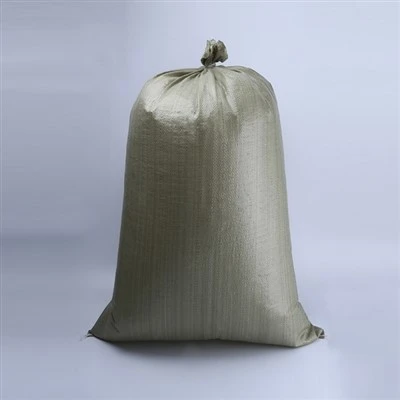
If you’re looking for a reliable supplier, or you have specific needs (higher flexibility, custom prints, different sizes), feel free to reach out to us for a quote or to ask more questions. We’re here to help you find the right bag for your project.
Regular Pp Woven Bags References:
- Polypropylene Properties and Applications, Journal of Applied Polymer Science, 2021
- Industrial Packaging: Design and Performance, Packaging Technology and Science, 2019
- Woven Polypropylene Bag Flexibility Testing Standards, American Society for Testing and Materials (ASTM) International, D570-21
Linyi Dongyi Import&Export Co., Ltd.
As one of the most professional regular pp woven bags manufacturers and suppliers in China, we offer a wide range of products with superior quality. We warmly welcome you to wholesale bulk customized regular pp woven bags from our factory. If you have any enquiry about quotation, please feel free to email us.
Address: 4 F, Zone A, Zhangjia Zhuxu Village, Lanshan District, Linyi City.
E-mail: donglai01972@gmail.com
WebSite: https://www.donglaipack.com/
