If you’ve walked through a refinery’s control room or stood beside a pipeline platform mid-operation, you’ve felt the quiet demand of a sector that refuses to compromise on reliability, safety, and efficiency. For decades, butterfly valves were a afterthought in oil and gas operations—cheap, basic workhorses for on-off flow control, nothing more. But today, if you work in upstream drilling, midstream pipeline transport, or downstream refining, you’ll know the question isn’t if high-performance butterfly valves are used in oil and gas—it’s why so many operators are ditching older, lower-performing valves for them. As someone who’s spent 12 years supplying, installing, and troubleshooting these valves for energy clients across North America, I’ve seen first-hand how this shift isn’t just a trend—it’s a necessity for meeting the oil and gas industry’s most grueling operational requirements. High-Performance Butterfly Valves
Let’s start with what makes a valve “high-performance” in oil and gas, because not all butterfly valves are created equal. A standard butterfly valve, the kind you might find in a municipal water system, relies on a simple disc rotating 90 degrees to open or close flow. It works for low-stakes, low-temperature applications, but in oil and gas, that design falls short. High-performance butterfly valves (HPBVs) are engineered to outperform those basic models in three core areas: bubble-tight shutoff (critical for preventing fugitive emissions, which are a top regulatory and financial risk), resistance to extreme operating conditions (high pressure, corrosive fluids, wide temperature swings), and long cycle life (able to open and close thousands of times without degrading). For context, a standard valve might last 5,000 cycles before needing repair; a HPBV I supply is tested to withstand 250,000 cycles, even in harsh environments.
Now, why does oil and gas need this level of performance? Let’s break down the sector’s key segments, because HPBV use varies by what you’re transporting. Upstream operations—drilling for crude oil or natural gas in remote offshore platforms—have some of the harshest conditions on Earth. Here, valves handle raw well stream: a mix of crude, gas, water, and corrosive components like hydrogen sulfide (H2S) and carbon dioxide (CO2), which eat away at lower-quality valve parts. A leak here isn’t just a nuisance—it can lead to costly shutdowns, environmental fines, or even safety incidents. I worked with an offshore operator in the Gulf of Mexico two years ago who was using standard gate valves on their wellhead control lines; they were experiencing 12 unplanned shutdowns a year due to seal leaks. When we swapped those for HPBVs with graphite-filled seats and corrosion-resistant alloy discs, their shutdowns dropped to two, and they saved over $1.2 million in lost production and repair costs that first year. The key for upstream HPBVs is their ability to handle dynamic pressure changes too: during well flow adjustments, pressure can spike and drop 10,000 PSI in minutes, and HPBVs maintain their seal even under those extremes.
Midstream operations, which transport oil and gas through thousands of miles of pipelines, are where HPBVs have seen the fastest adoption in the last 15 years. Midstream operators rely on valves to regulate flow between compressor stations, storage tanks, and cross-country pipelines. A pipeline leak can shut down entire sections, disrupt supply to refineries, and trigger regulatory audits. For a long time, operators chose ball valves for these lines because of their reputation for tight shutoff, but HPBVs have closed that gap. Modern HPBVs use a double-offset disc design—meaning the disc’s pivot point is offset from the seat, so the disc doesn’t rub against the seat during rotation. That eliminates wear, extends valve life, and delivers bubble-tight shutoff even at 1,440 PSI, the standard for most long-haul gas pipelines. I recently supplied a 36-inch HPBV installation to a midstream company in Texas; they replaced four standard ball valves that were failing every 18 months, and their maintenance team now only inspects the HPBV every five years. What’s more, HPBVs are much lighter and smaller than ball valves of the same size, which cuts down on installation time—critical for pipeline projects where every day of work delays supply.
Downstream refining is another major user of HPBVs, and here, the stakes are even higher. Refineries process crude into gasoline, diesel, and petrochemicals, with operations that involve high-temperature fluid catalytic cracking, distillation, and coking units—all environments where standard valves can’t handle heat over 800°F. HPBVs are engineered with materials like Inconel or Hastelloy for internal components, and flexible graphite or PTFE seats that perform in temperatures from -20°F to 1,100°F. They also meet strict fugitive emission standards, like API 641, which requires less than 100 parts per million of emissions from valve stems. A refinery I work with in Louisiana had a problem with standard butterfly valves on their distillation unit’s overhead lines; the valves were leaking volatile organic compounds (VOCs), which led to a $280,000 EPA fine in 2021. We retrofitted those lines with HPBVs that meet API 641 and ISO 15848, and in the three years since, they’ve had zero emission violations. For refiners, that’s not just compliance—it’s protecting their bottom line, since fugitive emission fines can run into millions of dollars annually, and unplanned shutdowns to fix leaks cost even more.
But let’s be clear: HPBVs aren’t the right choice for every oil and gas application. I still see operators trying to use them for on-off control in very small, low-pressure lines, or for services that require throttling flow with very precise adjustments—for that, a control valve is still better. But where they shine is in most primary flow control applications across all three segments, and that’s why their adoption has grown 18% annually in oil and gas since 2018, according to industry data. That growth isn’t just about performance either; it’s about total cost of ownership (TCO). A standard butterfly valve might cost 30% less upfront than a HPBV, but if it fails every two years, the total cost—including installation, repair, lost production—adds up fast. I’ve calculated that for a midstream pipeline with 100 valves, switching from standard valves to HPBVs has a payback period of less than 18 months, and over 20 years, it saves roughly $2.5 million in TCO.
Of course, there are common misconceptions about HPBVs in oil and gas, and I hear them almost every day from clients. The first is that butterfly valves, even high-performance ones, aren’t reliable for throttling flow. Old-style single-offset butterfly valves do have a problem with disc flutter and uneven wear when used for throttling, but modern double-offset and triple-offset HPBVs are designed specifically for throttling services. I supply triple-offset models that can throttle flow between 10% and 90% of capacity without cavitation, which is critical for adjusting flow in compressor stations or refining units. Another misconception is that HPBVs are too complex to maintain. In reality, most HPBVs have fewer moving parts than ball or gate valves, so routine maintenance is simpler—usually just a yearly seat inspection and stem lubrication, which takes a fraction of the time and cost of maintaining a standard valve.
As someone who’s been in this industry for years, I know that oil and gas operators don’t change their equipment for no reason. They change it because it solves a problem: reduces downtime, cuts costs, keeps workers safe, and meets regulatory requirements. HPBVs do all of that, which is why they’re now a staple in upstream, midstream, and downstream operations. That shift isn’t over either. As the industry moves toward more digital operations—predictive maintenance, IIoT sensors for valve monitoring—HPBVs are uniquely suited to integrate with these systems. Many of the HPBVs I supply come with position sensors that send real-time data to a control room, so maintenance teams can spot wear before it leads to a failure. For example, a client in Alberta uses this data to schedule valve replacements during planned shutdowns, rather than reacting to unplanned leaks, which has cut their maintenance costs by 22% in two years.
If you’re an operator in oil and gas, whether you’re managing an offshore platform, a pipeline network, or a refinery, and you’re tired of unplanned valve failures, high emission violations, or high maintenance costs, HPBVs are a solution worth exploring. As a supplier, I don’t just sell valves—I work with clients to assess their specific operations, recommend the right HPBV model for their needs, and provide ongoing support to ensure long-term performance. There’s no one-size-fits-all in oil and gas, and I don’t push a generic product; I tailor solutions to each client’s unique challenges.

If you’re ready to stop dealing with valve-related downtime, cut emission costs, and improve your operational efficiency, let’s connect to discuss your project. We can review your current valve setup, identify areas for improvement, and outline a solution that fits your budget and performance requirements. This is just the start of a conversation, and I’m here to provide the expertise and support your operations need.
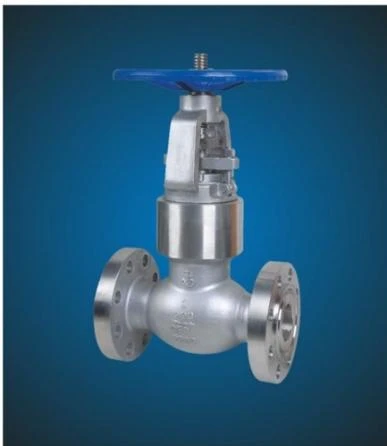
Pressure Seal Globe Valves References
API Standard 609: Butterfly Valves for Petroleum, Petrochemical, and Natural Gas Industries.
ISO 15848: Industrial valves – Measurement and test methods for fugitive emissions.
Midstream Business Magazine, 2023 Global Valve Market Report: Oil and Gas Segment Analysis.
Offshore Technology Journal, 2022: Offshore Valve Performance Harsh Environment Case Study.
Zhengmao Valve Co., Ltd.
As one of the most professional high-performance butterfly valves manufacturers and suppliers in China, we have world-leading production equipment and strong manufacturing capabilities. Please feel free to wholesale advanced high-performance butterfly valves at competitive price from our factory.
Address: No. 19, Zhangbao West Road, Wuxing Industrial Zone, Oubei Town, Yongjia County
E-mail: chinazmv@Gmail.com
WebSite: https://www.zhengmao-group.com/
