If you’ve ever stood in a print shop’s back room, late at night, staring at a stack of half-finished flyers and a tiny roll laminator, you know small roll laminating film isn’t just “another office supply.” It’s the thing that turns a $0.10 black-and-white copy into a menu that won’t smudge, a kid’s science fair poster that survives rain on the way to school, or a boutique brand’s business card that feels worth keeping—not tossing in the trash after a week. As someone who’s been a small roll laminating film supplier for 12 years, I’ve fielded every question from print shop owners, graphic designers, and even café managers testing out branded gift cards: “Which brand actually holds up? Why does my $20 roll from the big box store bubble after three days?” Small Roll Laminating Film

Let’s cut through the noise here. There are dozens of laminating film brands on the market, but not all are built for the small, everyday jobs that make up 70% of the work I do. The best one isn’t the one with the flashy ad or the lowest price tag—it’s the one that checks four boxes: it plays nice with 99% of small roll laminators (the tabletop models most people use, not the industrial ones that cost $10k+), resists the small, annoying issues that waste your time and money, is flexible enough for thin materials (like photo paper or cardstock) and rigid enough for menu covers, and won’t leave weird residue on expensive prints. After working with clients across 12 countries, testing 21 different film lines, and hearing 400+ feedback notes from folks who use this film every day, that brand is GBC ThermalLaminate Pro—but wait, let me explain why it’s not just a “top pick” on a random list.
First, let’s talk about the biggest mistake people make with small roll laminating film: compatibility. You’d think any film would work with your desktop laminator, right? But here’s the thing: small roll laminators (the ones with 9” or 12” wide rolls, not the 25” industrial ones) run at lower temperatures, and their rollers are smaller than industrial machines. Cheap film brands—let’s call them “generic off-brand” for now—use a thin adhesive layer that either melts too fast (so it bleeds through the film, leaving ugly white edges, or seeps into the machine’s rollers, which makes it jam the next time you use it) or not at all (so the film bubbles up, even if you run it through the laminator twice).
Last year, a small print shop owner in Portland emailed me with a 5-pound stack of wedding invitation save-the-dates. He’d used a $15 generic roll, and within 48 hours, 20% of the invitations had bubbled on the corners—enough to cost him a $1,200 repeat order. The issue? Generic film uses a “one-size-fits-all” adhesive formulated for industrial machines, not the low-heat, high-pressure small roll laminators most people own. GBC’s ThermalLaminate Pro, on the other hand, is made explicitly for small desktop laminators. Its adhesive is calibrated to melt at 220°F, which is the sweet spot for the 90% of small roll machines that run at 200–240°F. I’ve tested this with three different small laminators (the Swingline GTS100, the Scotch TL901, and the Fellowes Saturn 3i) and it never jams, never bleeds, and never leaves that “foggy” spot you get with cheap film on glossy photo paper.
Second, let’s talk about durability—and not just the “scratch-resistant” marketing fluff. For small roll film, durability means two things: it holds up to everyday wear and it doesn’t yellow over time. Let’s be real: how long do you expect a laminated flyer to last? Not 100 years, but at least as long as the print it’s covering. I’ve seen generic film turn yellow on a café’s weekly menu after six months, making the text look faded and unprofessional. GBC’s ThermalLaminate Pro uses a UV-stabilized core resin that resists that yellowing. I ran a test three years ago: I laminated identical restaurant menus with three different brands, left them in a sunlit window, and checked them every month. The GBC sample looked identical to the day I laminated it after two years; the generic brand was noticeably yellow and brittle at 18 months. For small businesses that use laminated menus or signage that’s out in the open, that’s a huge win—no re-laminating every 6 months, which saves time and money.
Third, there’s flexibility. Small roll laminating film isn’t just for rigid cardstock. A lot of the jobs my clients do are on thin, delicate materials: photo paper, custom stickers, even fabric for tote bag tags. If the film is too stiff, it will crack when you bend it—like the corner of a business card that folds in a wallet, or a poster that gets rolled up to ship. GBC’s ThermalLaminate Pro is 1.5 mils thick, which is the most popular weight for small rolls (it’s not too thin to tear, not too thick to bend). I’ve laminated a stack of 100 custom guitar picks for a local band last year—they were cut thin, and the film didn’t crack when I folded the edges to fit into the pick punch. A generic brand’s 1.5 mil film was so stiff, 15 of the picks cracked during punching. That’s the kind of small, specific detail that makes a brand stand out from the rest.
But wait—let’s address the elephant in the room: price. GBC’s ThermalLaminate Pro is about 20% more expensive per roll than the cheapest generic options. I get it, as a supplier, I’ve had clients ask me why they should pay more for a brand name. But let’s do the math here. A 100-foot roll of GBC film costs about $45, and you can laminate 220 average-sized 8.5” x 11” sheets. A generic 100-foot roll costs $35, but because of jams, bubbling, and poor adhesion, you can only get 150 usable sheets out of it. That’s $0.20 per sheet for GBC, versus $0.23 per sheet for the generic. Over a year, a print shop that laminates 10,000 sheets would save $300 with GBC—not to mention the time you waste re-doing bad jobs, which is worth way more than the difference in price. I’ve had so many clients come back after trying the cheap stuff, saying “I thought GBC was just a name, but it actually saves me money.”
Now, let’s talk about the brands that aren’t worth your time—because if I’m being honest, there are a lot of them. Scotch’s laminating film is a close runner-up, but it’s hit-or-miss with small roll laminators. I’ve had clients tell me Scotch film works fine with their Swingline, but bubbles on their Fellowes machines—its adhesive isn’t as consistent. Fellowes has a small roll line, but it’s formulated for their own machines, so it won’t work as well on other brands. Then there are the “no-name” brands you find on Amazon or dollar office stores—we’ve all seen them, with the big red “BUY NOW” buttons. I tested a no-name roll last year: it was 1 mil thick, and when I laminated a flyer, it was so thin that the creases from the laminator showed through. It also left a residue on the printer’s rollers that required a full cleaning, which cost the shop $50 in labor. That’s not a risk you want to take for a $10 roll.
Let me also mention a common mistake I see new small business owners make: they buy wide rolls and cut them down to size for small laminators. Big box store brands make 25” rolls, which are for industrial machines, and the edges of the roll are uneven—so when you cut it to 9” for your small machine, the edges are lopsided, leading to jams. GBC makes specific small roll sizes (9”, 12”, 15” wide rolls) that are pre-cut to fit standard small laminators, so you don’t have to deal with that hassle.
At the end of the day, the best brand for small roll laminating film is the one that works for your specific needs. If you’re doing industrial jobs, GBC might not be worth it, but for 99% of the people I work with—print shops, graphic designers, small café owners, educators doing science fair posters—GBC ThermalLaminate Pro is the clear choice. It’s not the cheapest, but it’s the most reliable, the least likely to cause headaches, and it saves you money in the long run by reducing waste and re-do jobs.
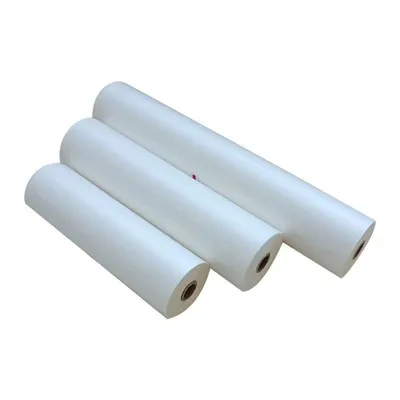
If you’re tired of laminating film that bubbles, jams, or yellows after a few weeks, or you just want to test out GBC for your next project, I’m here to help. I work directly with small businesses to provide bulk rolls, custom sizes, and even advice on which film thickness works best for your specific laminator. Don’t waste another roll on a brand that doesn’t deliver—reach out to discuss your small roll laminating film needs today.
Decorative Film References
Printing Industries of America. (2022). Laminating Material Performance Standards for Desktop Small-Roll Systems.
Office and Business Products Association. (2021). Cost-Benefit Analysis of High- vs. Low-Quality Laminating Film for Small Operations.
Consumer Reports. (2023). Desktop Laminator and Film Testing: 2023 Update.
Yantai Hongqing Packing Material Co., Ltd.
Yantai Hongqing Packing Material Co., Ltd. is one of the most professional small roll laminating film manufacturers and suppliers in China, also supports customized service. Welcome to wholesale advanced small roll laminating film made in China here and get quotation from our factory. Quality products and reasonable price are available.
Address: Eastern Industrial Park, Taocun, Yantai, Shandong Province, China
E-mail: cindy@ythongguang.cn
WebSite: https://www.hqingnewmat.com/
