Hey folks, if you’re here staring at your electrical panel wondering, “What size RCCB do I actually need for my house?” you’re in the right spot. Full transparency: I’m part of a small team that supplies RCCBs—you know, those life-saving devices that cut power fast if there’s a ground fault, preventing shocks or even fires—so I get it when people mix up voltage ratings, current sizes, and sensitivity like it’s a jumble of wires in an old attic. Let’s break this down like we’re chatting over a coffee, no fancy jargon b.s. RCCB

First, let’s keep this basic. Your house runs on either 120V or 240V (depending where you’re based, but let’s cover both), and your main electrical service is usually rated for a specific total current draw. That’s the big number on your utility meter or the main breaker in your panel—think 100A, 150A, or 200A. Your RCCBs don’t just plug into that main line for the whole house, by the way. Most people split RCCBs by circuit: kitchen outlets, bathroom circuits, garage tools, maybe your hot tub or HVAC unit. But if you’re doing a whole-house RCCB setup (for newer builds or full rewires) that’s a different call—we’ll hit that later.
The first number you need to nail is the RCCB’s rated current—that’s the “A” number, like 16A, 32A, 63A, 100A. That’s how much continuous load the device can handle without tripping unnecessarily. If you grab a 100A RCCB for a kitchen that draws max 20A for your stove and 15A for your fridge, you’re wasting money on overkill, and it might not be sensitive enough to catch a small ground fault (like a frayed extension cord touching a wet floor, which is exactly when you need it). On the flip side, if you put a 16A RCCB on your 50A dryer circuit, it’ll trip every time you run a load of towels plus the heating element—total pain.
Here’s the rule of thumb we use for our customers: Add up the max amps of all the devices on a single circuit. For standard outlets (the ones you plug lamps, phones, blenders into), each 15A circuit is good for ~1800 watts (volts x amps = watts, so 120V x 15A = 1800W). Kitchens often use 20A circuits, since appliances there draw more—fridges, microwaves, dishwashers can add up to 2000W or so, so a 20A RCCB is your go-to there. Bathrooms? Wet environments, so you must have RCCBs here, and stick to 15A for small outlets, 20A for a wall heater if you have one. Garage circuits for power tools? Those are 15 or 20A too, unless you’re running a welder, which is a whole other story (you’d need a 50A RCCB there, fyi).
Now sensitivity—this is the part that trips people up. RCCBs have a “trip current” (usually written as mA, milliamps). For house use, there are two main types: 30mA and 100mA. Let’s be clear: 30mA is for private, wet areas—bathrooms, kitchens, outdoor sockets. 30mA will trip super fast (like 0.03 seconds) if there’s even a tiny ground fault, which is what stops a serious shock. 100mA is for general circuits, main panels, or areas where you might draw more power (like a basement workshop). You’d never use 30mA on your main house RCCB, though—too sensitive, it’d trip every time you turn on your AC and your dryer at the same time. That’s a common mistake we see: someone buys a 30mA whole-house RCCB and ends up disabling it out of frustration, which defeats the whole purpose.
Wait, what about whole-house RCCBs? Let’s say you’re retrofitting an old house that never had ground fault protection before, and you don’t want to install individual RCCBs on every circuit. Most modern houses use a 200A main RCCB with 100mA sensitivity here, paired with smaller 30mA RCCBs on high-risk circuits. But before you go that route, check your local electrical codes—some places require individual RCCBs in bathrooms, kitchens, and outdoor spaces, no exceptions. Also, don’t skimp: cheap RCCBs might not actually trip at the rated mA, which is why our team tests every unit we sell, so you know it’ll work when you need it.
Another thing: don’t mix up RCCBs with RCBOs. RCBOs are the combination of an RCCB and an MCB (miniature circuit breaker) in one, which is great for individual circuits, especially if you need overcurrent protection and ground fault protection. If you’re rewiring a circuit from scratch, RCBOs are a solid pick, but if you’re replacing an old breaker, a standard RCCB is usually fine.
Let’s run through a quick example to make this concrete. Suppose you have a 200A main service, and you’re setting up your kitchen: your stove is 30A, microwave is 15A, dishwasher is 10A, plus two outlet circuits at 15A each. Add those up: 30+15+10+15+15 = 85A, so your kitchen circuits would use two 40A RCCBs (or two 20A RCBOs, depending on setup) with 30mA sensitivity. Your bathroom: two outlets, 15A each, so a 15A RCCB at 30mA. Garage power tools: a 20A RCCB at 100mA. That adds up to a total RCCB load way under your 200A main, which is perfect—no overloading, and each circuit has the right protection.
Now, some common myths we hear all the time: “I don’t need an RCCB because the fuse will blow.” No—fuses blow from overcurrent, like a short circuit. RCCBs blow from ground faults, which is when electricity escapes to a surface it shouldn’t (like a wet countertop, a frayed cord touching metal). Those two are totally different, so you need both. Another myth: “A higher amp RCCB is better.” No—if your circuit only draws 15A, a 50A RCCB will be too slow to catch a small ground fault, because it’s not calibrated for that low current.
Wait, what if you have a solar setup? Or an EV charger? EV chargers usually pull 30A or 50A, so you’ll need a 50A or 63A RCCB for that circuit, and since outdoor, it’s 30mA sensitivity. Solar inverters? Check your inverter’s recommended current, but most residential solar setups use 40A or 60A RCCBs for the inverter circuit, again with sensitivity matching the area (outdoor = 30mA, indoor garage = 100mA).
Now, a quick word of caution: electrical work isn’t something to mess with unless you’re qualified. Even if you’re just replacing a breaker, make sure you turn off the main power first, test with a non-contact voltage tester, and double-check that you’re getting the right size. If you’re not comfortable, call a licensed electrician—they’ll know your local codes and make sure everything’s up to snuff.
Since I’m on the supply side, I’ll be real with you: there’s no one-size-fits-all RCCB, but following those rules will get you 90% there. If you’re still unsure, shoot us a note—we don’t do pushy sales, we just want to make sure you get a device that actually keeps your house safe, not something that’s the wrong size or sensitivity. Just reach out to chat through your setup, and we can point you to the right model without all the sales fluff.
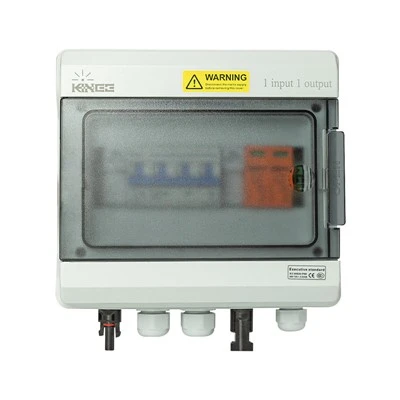
At the end of the day, an RCCB is one of those things you hope you never need, but if you do, it’s literally a life-saver. Don’t cut corners on sizing it—your house, your family, your tools, they’re worth the right fit. No more guessing, no more overpaying, no more disabling it because it’s too sensitive. That’s the goal.
Cable Marker References:
- International Electrotechnical Commission (IEC) 60947-2: Low-voltage switchgear and controlgear – Part 2: Circuit-breakers.
- National Electrical Code (NEC) Article 210.8: Ground-Fault Circuit-Interrupter Protection for Personnel.
- Electrical Safety Authority (ESA): Residential Ground-Fault Protection Guidelines.
- Institute of Electrical and Electronics Engineers (IEEE) 1584: Guide for Performing Arc-Flash Hazard Calculations.
Wenzhou Kinee Electrical Co., Ltd.
Wenzhou Kinee Electrical Co., Ltd. is one of the most professional rccb manufacturers and suppliers in China, featured by quality products and good price. Please rest assured to buy advanced rccb made in China here from our factory. We also accept customized orders.
Address: Floor 2&3, Room 101, Building 24, WenzhouWenbo Technology Industrial Park, No. 706 YanyunRoad, Kunpeng Subdistrict, Wenzhou Marine Economic Development Demonstration Zone, WenzhouCity,Zhejiang Province
E-mail: sandyma@kinee.net
WebSite: https://www.kinee.net/
