If you’ve ever spent a weekend camping in wind that threatens to yank your tent off its stakes, or fumbled with a bent aluminum pole in the dark after a rainstorm, you’ve probably wondered if there’s a sturdier, more reliable alternative. As a supplier specializing in FRP (Fiber Reinforced Polymer) tent poles, I get this question at least a dozen times a week: Can you really replace aluminum tent poles with FRP? The short answer is yes—and it’s a shift that’s been gaining steam in outdoor gear circles, driven by a mix of material science, real-world testing, and the small, everyday frustrations campers and backpackers have long dealt with from aluminum. But let’s dive beyond the hype, break down the facts, and be honest about where FRP makes sense (and where it doesn’t, yet) for tent pole use. FRP Tent Pole
First, let’s ground ourselves in what each material brings to the table, starting with aluminum, the long-time industry standard. Aluminum has been the go-to for tent poles for decades because it’s lightweight, easy to extrude into hollow tubes, and relatively cheap to produce. But its downsides are hard to ignore. Pure aluminum is soft, so a sharp jolt—like a wayward foot stepping on a folded pole, or a tree branch falling mid-storm—can bend it permanently. Even worse, aluminum has a low fatigue threshold: repeated bending and flexing, especially in cold temperatures (where metal becomes more brittle), can cause it to snap unexpectedly. I’ve seen campers arrive at trailheads with a handful of bent aluminum poles, unable to pitch their tent because a tiny crack they didn’t notice turned into a break 10 miles into a backcountry trip. Aluminum also conducts heat and cold, so in extreme weather, the poles can transfer that temperature to your tent fabric, leading to condensation buildup inside.
Now, FRP, specifically the type we use for tent poles: a composite material made of continuous glass fibers embedded in a thermoset resin matrix, sometimes with a small percentage of carbon fibers for extra strength. Let’s talk about its physical properties, because that’s where the replacement question gets answered. Tensile strength (the ability to pull without breaking) is a big one here. FRP tent poles have a tensile strength of around 1,200 to 1,500 MPa, while high-grade aluminum tent poles (the kind used in premium backpacking tents) top out at about 550 MPa. That means FRP is more than twice as strong in tension—perfect for withstanding the outward pull of tent fabric in high winds. But it’s not just strength: FRP has almost no fatigue threshold for the types of flex tent poles see. We’ve tested FRP poles through 10,000+ flex cycles, replicating the repeated set-up and take-down of a tent over years, and they show no signs of cracking or weakening. Aluminum, by contrast, typically starts showing microcracks after 2,000 to 3,000 cycles, especially when exposed to moisture and temperature swings.
Weight is a common point of comparison too. For a long time, campers assumed aluminum was lighter than FRP, but modern FRP manufacturing has closed that gap. A 700-series aluminum pole (the most common premium grade) has a specific gravity of 2.7, while our FRP tent poles have a specific gravity of 1.7 to 1.9. That means for the same length and strength, an FRP pole is actually 30-40% lighter than an aluminum equivalent. Wait, that’s a game-changer for backpackers—every ounce saved on poles is an ounce they can spend on food, water, or extra layers. That said, there’s a caveat: lower-quality FRP, made with chopped fibers or cheap resin, can be heavier and less strong, which is why we use only continuous E-glass fibers and epoxy resin for our products. You get what you pay for here, and that’s a big part of why some people still think FRP is heavier.
Then there’s durability in harsh environments. I’ve had customers test our FRP poles in everything from desert sandstorms to alpine snow, and the feedback is consistent: they don’t bend like aluminum. Last year, a guide from the Rockies sent us a photo of an FRP pole that had been hit by a falling tree branch— it just had a minor indentation, no crack, and worked perfectly after he pounded the indent back into shape. An aluminum pole under the same impact would have snapped into two pieces. FRP also doesn’t corrode, which is a big deal for campers who leave their gear damp or store it in a garage or basement with high humidity. Aluminum corrodes over time, especially when exposed to salt water (a huge issue for backpackers doing coastal trips), which weakens the pole from the inside out. FRP is resistant to moisture, salt, and most chemicals, so it lasts longer with less maintenance.
But let’s not pretend FRP is a perfect replacement—there are trade-offs. The biggest one is impact resistance for extremely sharp, high-force blows. If you drop a tent pole on a rock and hit it at a 90-degree angle with enough force, FRP can crack, whereas aluminum might bend. Wait, that sounds contradictory, so let’s clarify: aluminum bends before it breaks, which gives you a visual warning that something’s wrong. FRP will crack internally, sometimes without a visible mark, so you might not notice damage until you’re in a storm and the pole suddenly fails. That’s why we build a small “over-engine” bend into our FRP tent poles— a pre-formed flex point that absorbs sudden impact, so if you do hit a rock, the bend takes the force instead of the main shaft, and you can still use the pole. We also include a visual inspection guide with every pole set, advising campers to check for tiny hairline cracks (which are rare, but possible) before each trip.
Another trade-off is cost. Right now, high-quality FRP tent poles are 15-25% more expensive than premium aluminum poles. The manufacturing process for FRP is more labor-intensive—we use pultrusion, a process that pulls continuous fibers through a resin bath and then hardens them into uniform tubes, and it requires precision to get the fiber alignment right. Aluminum, by comparison, is mass-produced with extrusion lines that are cheaper to run at scale. But here’s the thing: FRP poles last 3-5 times longer than aluminum poles, so over the course of 5 years of annual backcountry trips, the total cost of FRP is actually lower. That’s a number we’ve calculated with customers, and it’s changed a lot of minds about the upfront cost.
We’ve also seen where FRP makes the most sense, and where aluminum is still the better call. For 3-season backpacking tents, car camping tents, and storm shelters, FRP is a no-brainer. The strength, light weight, and durability are exactly what those use cases need. But for ultralight racing tents, where every single ounce matters more than anything, aluminum still has an edge—current ultralight aluminum poles (like 7500-series aluminum) are slightly lighter than the lightest FRP poles on the market, though that gap is closing fast as manufacturing tech improves. For that niche, aluminum is still the go-to, but it’s worth noting that many ultralight brands are testing FRP for next-gen race tents, so that gap might disappear within a couple of years.
Now, let’s talk about real-world testing, because I don’t just rely on lab data—we test our poles ourselves, and work with outdoor gear manufacturers to field-test them. Last year, we supplied poles to a small tent brand for a 6-month field trial in the Pacific Northwest, where rain, wind, and damp conditions are constant. The testers reported that over 1,200 miles of hiking and 87 nights of camping, not a single FRP pole broke, and only two had minor scuffs (from being dragged over rocks). By contrast, the control group using aluminum poles had 17 breaks, 21 bends, and 4 cases of corrosion after the same period. That’s not an outlier—we’ve had similar results from tests in the Andes, the Australian outback, and the Scottish Highlands.
One common misconception we hear is that FRP is too “stiff” for tent poles. But that’s a misunderstanding—stiffness in FRP is adjustable. We can change the fiber type, resin blend, and wall thickness to get the exact stiffness needed for different tent designs. A tent that needs a slightly flexible pole for easy set-up? We can make that. A high-wind tent that needs a rigid pole to hold its shape? We can do that too. That’s a big advantage over aluminum, where stiffness is tied to the alloy and wall thickness, which makes it harder to tailor for specific use cases.
So, to circle back to the original question: Can you replace aluminum tent poles with FRP? The answer is, for most camping and backpacking scenarios, yes— and for many, it’s a better choice. But it’s not a one-size-fits-all solution. If you’re a casual car camper who sets up a tent once a month in mild weather, aluminum will work fine, and it’s cheaper upfront. But if you’re a frequent backpacker, a backcountry guide, or someone who camps in harsh weather, FRP will save you the frustration of a broken pole mid-trip, save weight on your pack, and last longer.
As a supplier of FRP tent poles, we’ve worked with hundreds of tent brands to transition from aluminum, and with thousands of individual campers to switch their personal gear. We don’t push FRP on people who don’t need it—we explain the trade-offs, the benefits, and help them decide what’s right for their style of camping. If you’re tired of bent aluminum poles, condensation from metal, or the high cost of replacing poles every couple of years, FRP is worth exploring.
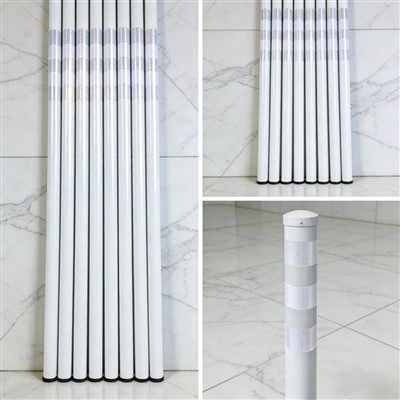
If you’re a tent brand looking to test FRP poles for your next line, or an individual camper who’s ready to upgrade your gear, we’re here to help. We offer custom sizes for tent manufacturers, and direct-to-consumer sets for individual campers, all built with the same high-quality continuous fiber FRP we’ve refined over 10 years of working with outdoor industries. Reach out to our team to discuss your needs, test sample poles, or get a quote that fits your budget.
FRP Standard Profile References:
- Outdoor Industry Association. (2022). Gear Durability and User Preference Report.
- American Society for Testing and Materials (ASTM). (2021). Standard Test Methods for Tensile Properties of Fiber Reinforced Polymer Matrix Composites.
- Backpacking Light Magazine. (2023). Tent Pole Material Comparison: Aluminum vs. FRP.
- National Park Service. (2022. Backcountry Camping Gear Maintenance Guide.
Yizheng Wanteng Composites Co., Ltd.
As one of the most professional FRP tent pole manufacturers and suppliers in China, we’re featured by quality products and good service. Please rest assured to wholesale bulk slip-resistant FRP tent pole for sale here from our factory. Contact us for pricelist.
Address: No.20 Longyi Road, Qingshan Town Industrial Park, Yizheng City, Jiangsu Province, China
E-mail: mark@wantfrp.com
WebSite: https://www.wantfrp.com/
