If you’ve ever worked in metal fabrication, aerospace component machining, or heavy equipment manufacturing, chances are you’ve encountered a horizontal milling machine—especially if you rely on equipment that can handle large, dense workpieces with high volume. As someone who’s supplied horizontal milling machines for over a decade, I’ve heard every pitch for their benefits: better chip evacuation, consistent cuts on multi-sided parts, and easier automation integration. But what I don’t talk about as often (because I know they matter just as much to buyers) are the disadvantages that come with these workhorses. I’ve watched customers write off a horizontal mill as a “one-size-fits-all” solution, only to run into costly, production-stalling issues that I wish they’d considered before pulling the trigger. Horizontal Milling Machine
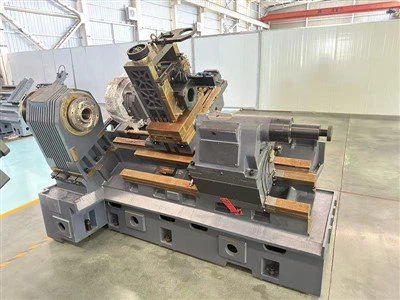
Let’s start with the biggest one: footprint and space requirements. A horizontal milling machine isn’t a desktop tool—we’re talking machines that can weigh 10,000 pounds or more, with X, Y, Z-axis travels that stretch 8 feet or longer for large models. I recently worked with a small job shop in Detroit that bought a pre-owned horizontal mill to expand their aerospace parts line. They squeezed it into a 12×20 foot bay that they’d previously used for two vertical mills, and within two weeks, they were tripping over workholding fixtures, blocking access to their CNC lathe, and having to reschedule jobs because they couldn’t move raw material pallets into the bay. Unlike vertical mills, which can fit into tighter spaces and even be integrated with existing automated material handling systems, horizontal mills often require custom floor reinforcements, dedicated power outlets (3-phase, 480V minimum for heavy-duty models), and enough clearance around the machine for chip collection units and maintenance access. For small to medium shops with limited floor real estate, this isn’t just an inconvenience—it’s a hidden cost that can add 15-20% to the total price tag when you factor in retrofitting the workspace.
Next up: complexity in setup and programming. I’ve seen new operators struggle to program a horizontal mill for weeks, even if they’re experienced with vertical mills. Horizontal mills use a rotary table (or “trunnion”) to rotate workpieces around a vertical axis, which means every angle, every offset, and every tool path has to be calculated differently than on a vertical unit. For example, if you’re milling a keyway on a vertical mill, you just align the workpiece to the X-axis and feed the tool straight down. On a horizontal mill, you have to account for the spindle’s position, the clearance between the rotating cutter and the workpiece sides, and even the direction of chip flow to avoid clogging. I once trained a crew at a defense contractor who spent three extra hours setting up a gear blank for milling because they didn’t realize the horizontal mill’s spindle had to be offset 0.25 inches to avoid hitting the rotary table’s base. That’s three hours of lost production time on a machine that costs $80 an hour to run—no small expense. Even with CAD/CAM software, programming a horizontal mill requires specific modules that many small shops don’t have, meaning they either have to invest in new software or hire a specialist to get their first job up and running.
Then there’s maintenance and tooling costs. Horizontal mills use larger, heavier cutters than vertical mills—typically 3-6 inch diameter end mills, face mills, or slitting saws, vs. 1-2 inch cutters for vertical units. Those cutters aren’t just more expensive to buy; they wear out faster if not set up correctly. Worse, horizontal mills have more moving parts: the rotary table’s gearbox, the spindle’s drawbar, the chip conveyor system, and the hydraulic clamps that hold workpieces in place. I had a customer in Texas who skipped a scheduled lubrication check on their horizontal mill’s rotary table, and the gear seized up during a run on a turbine blade. The repair took two days and cost over $5,000 in parts and labor—plus they lost a $12,000 rush job. Compare that to a vertical mill, where most maintenance is limited to changing filters and inspecting spindle bearings every six months. Tooling is another hidden hit: a set of horizontal mill arbors (the shafts that hold the cutters) can cost $2,000-$5,000, vs. $500-$1,500 for vertical mill tool holders. And if you run a mix of workpiece materials (aluminum, steel, titanium), you might need a whole set of cutters for each material, since horizontal cutters aren’t as versatile as vertical ones for material changes.
Material limitations are another key disadvantage. While horizontal mills are great for long runs of steel or cast iron parts, they struggle with soft, heat-sensitive materials like aluminum or plastics. The high spindle speed and powerful feed rate that make horizontal mills efficient for metal can generate too much friction, causing aluminum to gum up on the cutter or plastics to warp. I’ve had customers try to mill a series of aluminum spacers on a horizontal mill only to have every third part come out warped because the spindle’s heat didn’t dissipate fast enough. For soft materials, a vertical mill with variable speed control is a far better choice. Even with heavy-duty models, horizontal mills have a maximum material hardness rating—usually around 45 HRC—while some vertical mills can handle up to 60 HRC for hardened steel parts. If your shop regularly works with hardened alloys, a horizontal mill might not be the right fit, as the cutter would dull quickly and require constant replacement.
Let’s not forget about flexibility for small-batch jobs. If you’re running 50 parts a week, a horizontal mill is ideal. But if you’re doing prototype work or low-volume, custom jobs (1-5 parts), the setup time becomes a showstopper. Each new job on a horizontal mill requires re-aligning the rotary table, adjusting tool offsets, and programming a new tool path—often 1-2 hours of setup time vs. 15-20 minutes for a vertical mill. I worked with a custom machine shop in Chicago that took on a prototype job for a medical device, and they spent 3 hours setting up the horizontal mill, only to realize they had to make a last-minute design change. Reworking the program and re-setting up the mill took another 2 hours, and they ended up losing money on the job because the setup time cut into their profit margin. For shops that mix high-volume runs and custom prototypes, a horizontal mill can’t pivot as quickly as a vertical mill, leading to wasted time and missed deadlines.
Finally, there’s operator training and turnover. I’ve heard from shop managers that finding qualified horizontal mill operators is 20% harder than finding vertical mill operators. The specialized skills required—programming, setup, troubleshooting the rotary table and spindle—mean operators have to undergo 6-12 weeks of training, vs. 2-4 weeks for vertical mills. When an operator leaves, it can take months to train a replacement, leaving the machine idle. Last year, a client in Ohio lost their lead horizontal mill operator, and the machine sat unused for 8 weeks while they waited for a new hire to get up to speed. That’s 8 weeks of lost production time on a machine that was supposed to boost their output. For small shops with high operator turnover, this risk isn’t worth the benefits of a horizontal mill.
Now, don’t get me wrong—horizontal milling machines are still a critical tool for many industries, especially high-volume metal fabrication and aerospace manufacturing. They offer superior chip evacuation, multi-sided machining, and higher precision for large parts. But every buyer needs to weigh those benefits against the disadvantages I’ve outlined: space, setup complexity, maintenance costs, material limitations, low flexibility for small batches, and operator challenges.
At the end of the day, the right machine depends on your shop’s specific needs. If you’re a large operation with steady, high-volume steel runs and the space and budget to support a horizontal mill, it’s a great investment. But if you’re a small shop, a prototype-focused business, or tight on floor space, a horizontal mill might end up costing you more in the long run than it’s worth.
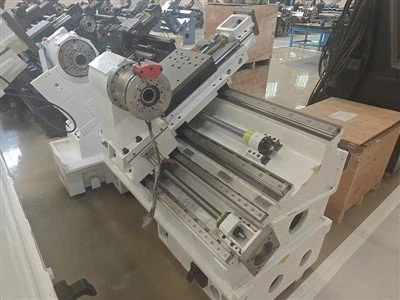
If you’re trying to figure out whether a horizontal milling machine makes sense for your operation, or if you’re weighing the costs and benefits of upgrading your equipment, I’d be happy to walk through your shop’s needs with you. I’ve worked with hundreds of customers over the years, and I can help you assess what will work best for your production goals, without pushing a machine that isn’t the right fit. Reach out to me to set up a consultation, and we can go over your current workflow, budget, and space to find the solution that works for you.
T Structure Hmc Machine References:
- Modern Machine Shop. (2022). “Horizontal vs. Vertical Milling Machines: Key Differences and Applications.”
- SME (Society of Manufacturing Engineers). (2021). “Machining Equipment Selection Guide for Job Shops.”
- American Society of Mechanical Engineers. (2020). “Maintenance Best Practices for Horizontal Milling Machines in Heavy Industry.”
Smartech Machinery & Equipment Co., Ltd.
As one of the most professional horizontal milling machine machine manufacturers and suppliers in China, we also support customized service. Please rest assured to buy bulk horizontal milling machine machine made in China here from our factory. Contact us for more details.
Address: Room 2832, Changping Commercial Mansion, Shihua Road, Futian Free Trade Zone, Shenzhen, China
E-mail: smartech@smartechcnc.cn
WebSite: https://www.smartech-cnc.com/
