Alright, let’s cut to the chase—if you’re running a shop that fits out vehicles, or maybe you’re a fellow cross car beam supplier like me, you’ve definitely stared at that blank section on the beam and thought, “Can I bolt this accessory here without breaking it?” That question—do cross car beams have weight limits for add-ons?—isn’t just a random tech query, it’s a make-or-break deal for keeping builds safe, avoiding warranty headaches, and not wasting money on parts that’ll crack mid-ride. Let’s break this down like we’re chatting over a coffee and a stack of production samples, no stuffy engineering jargon that makes your eyes glaze over. Cross Car Beam
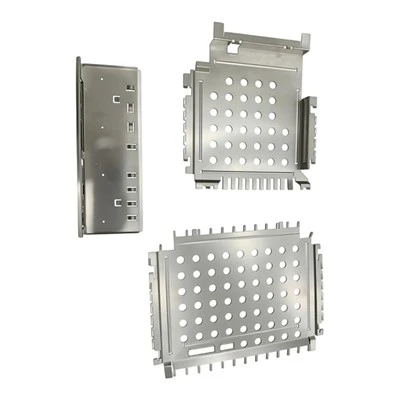
First, let’s get on the same page about what a cross car beam (CCB) actually is, because not everyone here builds them for a living. I’ve been cranking out CCBs for 7 years now—started as a production line tech, worked my way up to account manager, so I’ve got grease under my nails and a folder full of field test reports to prove it. A CCB is that metal (usually aluminum or stamped steel) bar that runs across the front of a car’s engine bay, right? It holds everything: the radiator, air conditioning condenser, sometimes the headlights, and even the steering column. It’s a structural component—so it’s not just a fancy shelf. That’s key here: it’s part of the vehicle’s primary crash structure, too. When a car hits something head-on, the CCB transfers the impact energy evenly to the frame rails. So it can’t just be flimsy; it’s engineered to take specific loads from the factory.
Now, when it comes to accessory installation—let’s define “accessories” real quick, because that’s where most people get tripped up. This isn’t the factory-installed A/C unit; this is the stuff you bolt on after the vehicle leaves the lot. Think light bars, winches for off-road trucks, auxiliary coolers for towing, tablet mounts for work vans, even extra speaker enclosures for custom builds. For my customers, that’s everything from small fleet companies outfitting delivery vans to off-road racers building buggies. They all ask the same thing: “How much can I bolt here before it breaks?”
The short answer is: YES, there are weight limits—but they’re not one-size-fits-all. That’s the big mistake a lot of aftermarket shops make. They see a random forum post that says “50 lbs max” and bolt on a 70 lb winch, only to end up with a cracked CCB on a test drive. Or they don’t even check and wonder why their CCB failed warranty later. The limits aren’t pulled out of thin air; they’re tied to three main things, all of which I live and breathe as a supplier.
First, the base material and manufacturing process. When we stamp or cast a CCB, we have specific tensile strength and yield strength specs. Yield strength is the big one here—that’s the amount of stress it can take before it deforms permanently. For example, our aluminum CCBs are T6 tempered, which gives them a yield strength of around 275 MPa. Our stamped steel ones are HSLA (high-strength low-alloy) with 350 MPa. If you bolt an accessory directly to the CCB, the load isn’t evenly distributed. If you use a cheap bolt mount that’s too small, all that weight is concentrated on a 1-inch spot, not the full length of the beam. The spot welds or injection-molded brackets that we use for factory parts? They’re tested to handle those factory loads, not a 60 lb light bar. I’ve seen a brand-new aftermarket bracket pull a spot weld right out of a CCB because the installer used a ¼-inch bolt instead of the recommended ⅜-inch one.
Second, the mounting location on the CCB. This is a huge one that most people skip. The CCB isn’t a uniform bar. The middle section is where the steering column mounts—that’s the stiffest part, because that’s carrying the steering load. The ends, where the headlight brackets attach, are a lot more flexible. We do finite element analysis (FEA) on every CCB design, and we map load zones like a map. Zone 1 (the middle): can handle extra load, because it’s reinforced. Zone 2 (between middle and ends): moderate. Zone 3 (the far ends): minimal. If you bolt a winch to Zone 3, that’s a bad time. We actually put little “do not load here” markers on our CAD files for our customers, but most of them don’t ask for the CAD—they just ask, “Where can I bolt stuff?”
Third, dynamic vs. static load limits. Wait, what’s the difference? Static load is the weight sitting still, like a 40 lb auxiliary cooler bolted on in your garage. Dynamic load is what happens when you drive over a pothole, hit a speed bump, or go off-roading—those forces can be 2 to 3 times the static weight. The factory CCB specs usually only account for static factory loads, plus a small dynamic buffer. So if an accessory is rated for 50 lbs static, don’t assume you can put a 50 lb light bar on it for off-roading—because when you hit a bump, that’s 120 lbs of dynamic load, and you’ll exceed the limit. I saw an off-road team last year that bolted two 55 lb light bars to the ends of their CCB, and on their first trail run, one light bar ripped the CCB bracket clean off. They tried to blame our CCB, but when I showed them their install photos and our load zone specs, they realized they’d mounted in the wrong spot and didn’t account for dynamic load.
Now, let’s talk about what my team does to help, because I’m not just here to lecture you—I’m here to solve problems. As a CCB supplier, we don’t just sell you a bar and wash our hands. We provide custom load limits for every accessory a customer wants to install. How? First, they send us a drawing of their accessory, how they want to mount it, and what vehicle it’s going on. We run FEA simulations to see how that load will distribute. Then we test it in our in-house lab—we use hydraulic presses to apply controlled loads, plus vibration testers to mimic driving over rough terrain. We don’t just do static tests; we do cyclic load tests, where we apply dynamic load thousands of times, to make sure it doesn’t fail over time. For example, last quarter a fleet company came to us wanting to mount 6 auxiliary battery packs to their delivery van CCB. We ran the simulation, adjusted the mounting bracket to spread the load across the middle zone, and gave them a specific limit: 75 lbs total for that area, with a maximum per mounting point of 20 lbs. We also supplied them with grade 8 bolts, because regular grade 5 bolts can snap under repeated dynamic load. They’ve had 100 vans on the road for 6 months with zero CCB issues.
But here’s the catch: even with all that, there are some accessories that we can’t endorse. If someone wants to mount a 200 lb winch to the far ends of a standard CCB, we’ll tell them straight up: that’s a safety hazard. The CCB isn’t designed for that, and no amount of mounting brackets will fix the dynamic load. In those cases, we’ll suggest a heavy-duty reinforced CCB—we make those too, with thicker material, more spot welds, and extra load zones. Those have higher limits, but they’re not infinite. We had a customer try to mount a 180 lb winch to our standard heavy-duty CCB, and our lab test showed that the dynamic load at 60 mph over a bump would exceed the yield strength by 15%. So we told them they needed our ultra-heavy-duty model, which is rated for up to 250 lbs in the middle zone. They switched, and they’re good to go.
Another thing people get wrong: modifying the CCB itself. Drilling holes in the CCB, cutting out sections, or welding on brackets that aren’t OEM-approved. Even if you do it right, drilling a hole in the middle load zone of a CCB creates a stress riser—a tiny point where stress concentrates, which can crack over time. I’ve seen a customer drill four holes in the middle of a standard CCB to mount accessories, and 3 months later, the CCB cracked right along the line of holes. We don’t advise modifying the factory CCB, because that voids any structural integrity guarantees, and you’re taking on unnecessary risk.
Now, let’s get real about why this matters for you, whether you’re a builder, a fleet manager, or a fellow supplier. If you ignore weight limits, you’re looking at three big problems. First, safety: a cracked CCB can fail in a crash, leading to serious injury. Second, warranty: vehicle manufacturers don’t cover damage from aftermarket accessories, and if you void the vehicle’s warranty, that’s a huge cost. Third, money: replacing a CCB isn’t cheap, and if your work is tied to that, you’re losing business and damaging your reputation. Last year, a small off-road shop in Texas came to me after they had three CCB failures in a month. They’d been using cheap aftermarket CCBs that didn’t provide load specs, and they were mounting accessories without checking. We helped them switch to our CCBs, gave them the load guides, and they haven’t had a failure since. They even referred two other shops to us.
So, let’s wrap this up with some actionable takeaways, because that’s what you came here for, right? First, don’t rely on generic “50 lbs max” online—always get specific load limits from your CCB supplier, or run your own FEA tests if you have the resources. Second, pay attention to mounting zones: middle is good for extra load, ends are bad. Third, don’t forget dynamic load—off-road, potholes, even heavy highway driving multiply static weight by 2-3x. Fourth, don’t modify the CCB if you don’t have to, and always use the right bolts and brackets (grade 8 for dynamic load, not cheap stuff). Fifth, if you need extra capacity, ask your supplier about reinforced or heavy-duty CCBs—there’s no shame in upgrading, it’s better than breaking.
At the end of the day, cross car beams are designed to do a job: carry factory components and protect passengers in a crash. Accessory installation is a bonus, but it has to be done within the designed limits. As someone who’s making these parts day in and day out, I’m not just selling a metal bar—I’m selling peace of mind. If you’re working on a build, whether it’s a work van, an off-road truck, a fleet unit, or something custom, and you’re not sure about weight limits, mounting spots, or which CCB to use, don’t guess. Reach out. We can walk you through the load specs, run simulations, and make sure your accessories are mounted safely without breaking the bank. No fine print, no vague answers, just real advice from someone who’s been in this game long enough to know what works and what doesn’t.
You don’t have to fumble around with trial and error. That’s why we’re here. Let’s make your build safe, reliable, and long-lasting.
Farm Implement Metal Parts References:
- Society of Automotive Engineers (SAE) J1100: Motor Vehicle Dimensions and Mass, 2022
- International Organization for Standardization (ISO) 12367: Road Vehicles – Crashworthiness of Components, 2019
- Cross Car Beam Design and Testing: A Supplier’s Field Guide, Global Automotive Components Association, 2021
- Finite Element Analysis for Structural Components: Best Practices, American Society of Mechanical Engineers (ASME), 2020
- Dynamic Load Considerations for Aftermarket Vehicle Accessories, Off-Road Industry Association, 2023
Suzhou Yehe Precision Stamping Co., Ltd.
With abundant experience, we are one of the most reliable cross car beam manufacturers and suppliers in China. We warmly welcome you to buy customized cross car beam at competitive price from our factory. If you have any enquiry about quotation, please feel free to email us.
Address: No.5, Beifang Road, Changshu City, Suzhou, Jiangsu Province, China.
E-mail: szyh06@yehejingmi.com
WebSite: https://www.yehe-precision.com/
