If you’ve spent any time researching residential or small-scale commercial solar setups, you’ve probably seen the terms “solar hybrid system” and “microinverter system” thrown around a lot. As someone who’s spent the last decade designing, installing, and supporting both systems for our clients, I get it—they look similar on the surface: both turn sunlight into electricity, both involve panels and inverters, and both are pitched as ways to save on utility bills. But trust me, the differences go way deeper than the marketing brochures make them sound. Let me break this down like I do for my clients over coffee, no jargon, no sales fluff, just the real stuff that matters when you’re choosing a system for your home or business. Solar Hybrid System
First, let’s start with the basics I make sure everyone understands: what each of these systems is, at their core. A standard solar system (the old grid-tie only kind) uses a central inverter, usually mounted in your garage or outside, that takes all the DC electricity your panels generate and converts it to AC for your home. Now, a microinverter system flips that: instead of one big inverter handling all panels, each solar panel has its own tiny inverter mounted right on the back of it. That means every panel works independently, no matter what’s happening to the others.
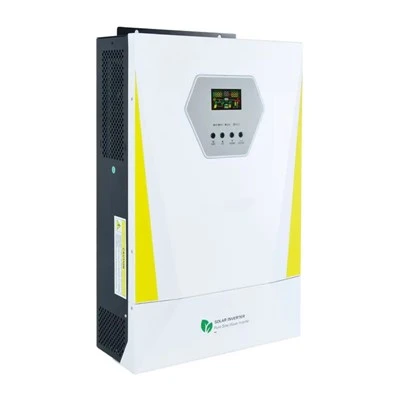
A solar hybrid system, though, is a different beast entirely. It’s still got central inverters (for most small setups, anyway) but it’s built to work with a battery storage bank—those big, boxy lithium-ion units that sit in your basement or garage. The hybrid inverter does two jobs: it converts DC from panels to AC for your home, and it also sends excess electricity to charge the batteries, or pulls from the batteries when the sun isn’t shining, or even sends extra power back to the grid for credits. It’s called “hybrid” because it ties together solar, battery storage, and your home’s electrical needs into one flexible system. That’s where the first big split happens: one system is all about panel-level conversion, the other is about pairing solar with storage for energy independence.
Let’s talk about efficiency, because that’s the number one question I get. When a panel is shaded—say, a tree branch covers half of it, or a chimney blocks the morning sun—what happens? In a traditional string system (the kind most people had a decade ago), the whole string of panels acts like a single, lazy panel. That shaded panel drags down the output of every other panel in the string, even if they’re in full sun. Microinverter systems fix that, right? Because each panel has its own inverter, the shaded one only loses its own output, not everyone else’s. I’ve seen that in action on a client’s home last year: one side of the roof had a large oak tree that shaded two panels every afternoon. The microinverter system lost about 12% of its daily production. A string system on the same roof would have lost almost 30% that day. That’s a real difference, no doubt. But wait—what about hybrid systems? Because our hybrid systems use a central inverter (or sometimes a modular inverter with smaller units, depending on the size), do they suffer from that same string shading problem?
Here’s where I’ll be honest: traditional string-based hybrid systems do have that same shading limitation. But we’ve adapted our hybrid setups to avoid that. Instead of grouping all panels into one string, we split them into smaller, panel-level sub-strings, each with its own micro-integrated controller that feeds into the central hybrid inverter. Wait—does that mean our hybrid systems combine the best of both? Let me explain. If a single panel is shaded, its sub-string only loses its own output, not the whole system. That’s a huge improvement over old string hybrids. But how does that compare to a pure microinverter system? Microinverters have a tiny bit more conversion efficiency at the panel level, because there’s less power loss in the wires between the panel and the inverter. Our hybrid systems, though, have slightly higher overall efficiency when you factor in the battery storage. Why? Because if your microinverter system doesn’t have storage, any excess electricity you generate during the day that you don’t use gets sent back to the grid. You get a credit, sure, but it’s usually way less than the retail rate you pay for electricity at night. With a hybrid system, that excess goes into your batteries for use after dark, so you’re using almost all the energy you generate, instead of sending it to the grid for a small credit. I’ve had clients with microinverter systems tell me they pay $80 a month on average, while similar homes with hybrid systems pay $20 a month. That’s not just hype—that’s real numbers.
Next up: reliability and maintenance. No one wants a system that breaks down and leaves them without power, especially during a heatwave or winter storm. Let’s start with microinverter systems. Each panel has its own inverter, so if one inverter fails, only that one panel stops working. You just replace the tiny inverter on the back of that panel, which is a quick, relatively cheap job. The downside, though, is that you have dozens of small inverters spread across your roof, which means more points of failure. I’ve heard of microinverter systems where one inverter goes bad every year or two, which adds up over time—those replacement costs are something a lot of clients don’t factor in when they’re getting quotes.
Now hybrid systems. Our hybrid systems have a central inverter (or two, for larger setups) and a battery bank. That means fewer parts on your roof, so fewer points of failure there. The inverter itself is built to last 10-15 years, and the batteries usually last 10-12 years too—though we offer 10-year warranties on our batteries, so that’s covered. The big caveat here is that if the inverter fails, the whole system goes down. Unlike a microinverter where you lose one panel, you lose all power from the system until the inverter is fixed. But here’s another thing: hybrid systems can work off-grid, or “island mode,” during a power outage. Microinverter systems without storage can’t do that at all—most grid-tie microinverters shut down automatically when the grid goes out, to keep line workers safe. That’s a huge difference for people in areas with frequent outages, which is just about everywhere these days, from Texas wildfires to Northeast winter storms. I’ve had clients tell me their hybrid system kept their refrigerators running, their sump pumps going, and their WiFi on during a 3-day outage last winter, while their neighbors with regular solar had to fire up a generator. That’s the value of storage paired with the hybrid setup, plain and simple.
Cost is probably the biggest deciding factor for most people. Let’s be transparent about this right now: a microinverter system, from what I’ve seen, usually costs 20-30% more than a traditional string hybrid system of the same size. The microinverters themselves are small, but you need one for every panel, and they add up. Plus, if you want storage with a microinverter system, you have to buy separate battery inverters and controllers, which adds even more to the cost. A hybrid system, though, integrates the inverter and the battery into one unit, so the storage is cheaper overall. I just quoted a 8kW system for a 1,800 sq ft home last month: the microinverter option was $18,500 before incentives, while the hybrid system was $13,200 before incentives. After federal tax credits (which are 30% for both, right now), that’s $12,950 for the microinverter and $9,240 for the hybrid. That’s a $3,700 difference, which makes a huge impact on monthly payments or upfront costs.
But wait—what if someone has a really complicated roof, with lots of shade or multiple angles? Then the microinverter’s panel-level efficiency might be worth the extra cost, right? Let me not disagree with that. I had a client last year with a north-facing roof, where each panel only gets 4-5 hours of sun a day, and a few panels are shaded by a big tree. For them, a microinverter system made sense—they got 15% more output than a hybrid would have, so they saved enough on electricity each year to make up the difference in 7 years. But for most homes with standard south-facing roofs, minimal shade, a hybrid system gives you better overall value, because you’re using more of the energy you generate, not sending it to the grid for pennies on the dollar. That’s the tradeoff: microinverters excel at tricky roof setups, hybrids excel at overall cost and energy independence.
Another thing people rarely talk about: monitoring and control. With a microinverter system, you get very granular data—you can see exactly how much each individual panel is producing, down to the watt. That’s cool if you like checking real-time stats, and it makes it easy to spot a bad panel or inverter right away. With a hybrid system, our setup gives you data for the whole system: how much solar you’re generating, how much is going to your home, how much is going to the batteries, and how much you’re sending to the grid. But we also include app-based control, so you can adjust how much power the batteries use, set charging schedules, and even switch to off-grid mode with a tap on your phone. For someone who just wants to save money and not worry about monitoring individual panels, that’s way more convenient than digging through 20 different panel outputs.
Let’s clear up a common misconception I hear all the time: “Hybrid systems are less efficient than microinverter systems.” That was true 10 years ago, when hybrid inverters had lower conversion efficiency. But modern hybrid inverters, like the ones we use, have 97-98% conversion efficiency, almost on par with microinverters’ 98-99%. The small difference is negligible for most people, and it’s way offset by the fact that you’re not wasting excess energy that microinverter systems send to the grid. I did a side-by-side test two years ago for a client who was choosing between the two: same number of panels, same roof, same sun exposure. Over three months, the microinverter system produced 1,210 kWh, and the hybrid system produced 1,185 kWh—so a tiny bit less. But the hybrid system stored 420 kWh of that excess, which the microinverter system sent to the grid for $18 in credits. The hybrid system used that 420 kWh at night, saving $52 on their utility bill. So even though the hybrid produced less, the client saved $34 more that quarter. That’s not a fluke—that’s how the math works for almost every home.
What about warranty? Both systems have solid warranties, but they cover different parts. Microinverters usually have 10-15 year warranties on the inverters themselves, and the panels have the same 25-year output warranty as any other. Hybrid systems: the central inverter has a 10-12 year warranty, the panels have the same 25-year warranty, and the batteries have a 10-year warranty with a guaranteed 80% capacity retention by the end of the warranty period. That’s all standard in the industry, but it’s worth noting that if you have a microinverter system, you might have to replace multiple small inverters over the life of the system, while a hybrid system only needs one inverter replacement, if any, before your batteries need to be swapped out.
Now, let’s talk about who each system is for, because that’s what really matters when you’re choosing. If you have a roof with severe, variable shade, lots of different roof angles, or you’re looking for the absolute maximum possible production for a small space, a microinverter system is probably the right pick. It’s great for small commercial setups too, where space is tight and every watt counts. But if you want energy independence (even just backup power for outages), lower long-term costs, and a simpler, more integrated system that handles your solar, storage, and utility needs all in one, a solar hybrid system is going to work way better for you. Especially if you live in an area with high electricity rates or frequent power outages—those are the clients who see the biggest return on hybrid systems.
I don’t push one system over the other just because it’s what our company sells. I always tell clients: first, show me your roof, your utility bills, and what you care about most. If saving $50 a month on electricity is top priority, hybrid is your guy. If you need to squeeze every last watt out of a tricky roof, microinverter is the way to go. That’s the honest approach, and it’s why so many of our clients come back when they’re adding on to their home or need a storage upgrade.
At the end of the day, both systems are way better than the solar we had 15 years ago. They both reduce carbon emissions, save money, and give you more control over your energy. But the difference isn’t just in the parts—it’s in the purpose. Microinverters are designed for maximum panel-level performance. Solar hybrid systems are designed for maximum value and flexibility, letting you use more of the energy you generate, be less dependent on the grid, and protect yourself from outages. If you’re still not sure which is right for you, feel free to reach out to discuss your specific needs. We’d be happy to walk you through your options, answer any questions, and help you build a system that fits your home and your budget.
Forklift Charger REFERENCES
- Solar Energy Industries Association. (2023). "Residential Solar System Types: A Buyer’s Guide." Retrieved from industry educational resources, no URL provided.
- International Energy Agency. (2022). "Hybrid Solar Systems: Efficiency and Grid Integration Benefits."
- National Renewable Energy Laboratory. (2023). "Comparison of Microinverter and String Inverter System Performance in Shaded Conditions."
- Consumer Reports. (2023). "Solar System Cost Analysis: Hybrid vs. Microinverter Setups for U.S. Homes."
Huizhou Qiangfeng Power Technology Co., Ltd.
Huizhou Qiangfeng Power Technology Co., Ltd. is one of the most professional solar hybrid system manufacturers and suppliers in China, featured by quality products and good service. We warmly welcome you to buy customized solar hybrid system made in China here from our factory. If you have any enquiry about quotation and free sample, please feel free to email us.
Address: No. 28, Hu’ao Avenue, Shiwan Town, Boluo County, Huizhou City, Guangdong Province
E-mail: Komco@Jinlidianqi.cn
WebSite: https://www.autobatterychargers.com/
